Red Dots, A Playful Mark of Value and Ownership
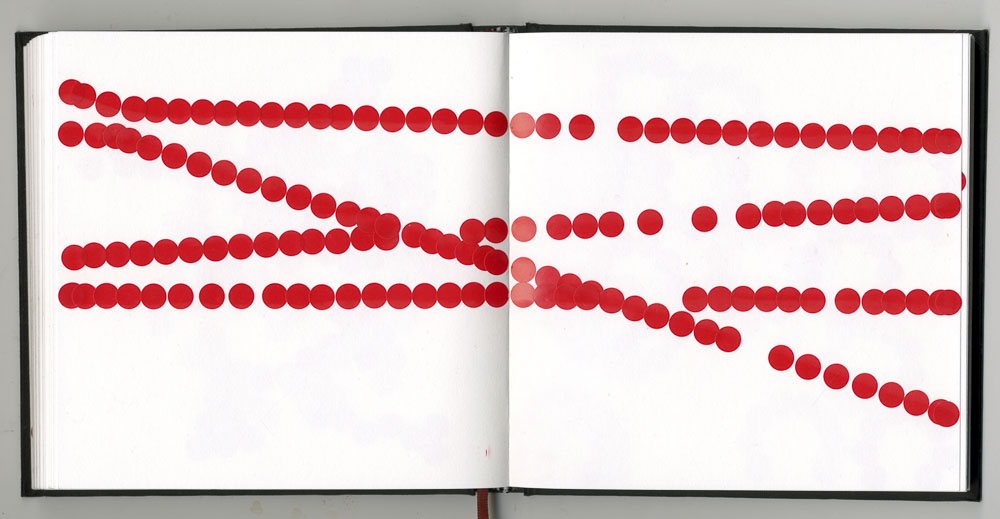
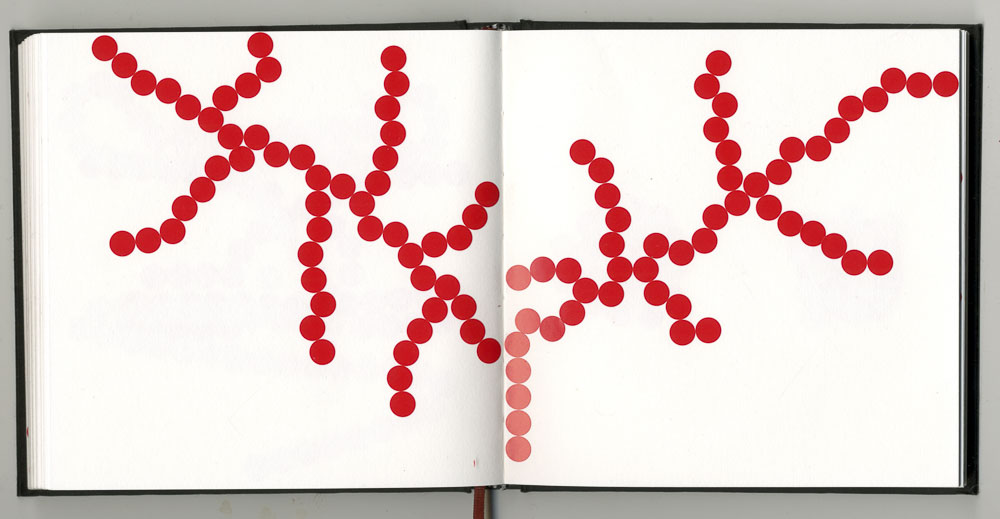
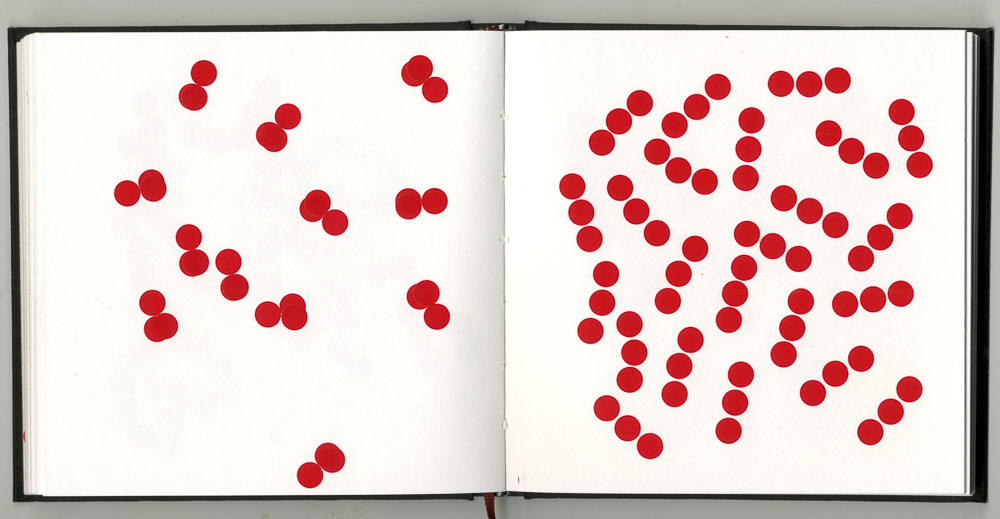
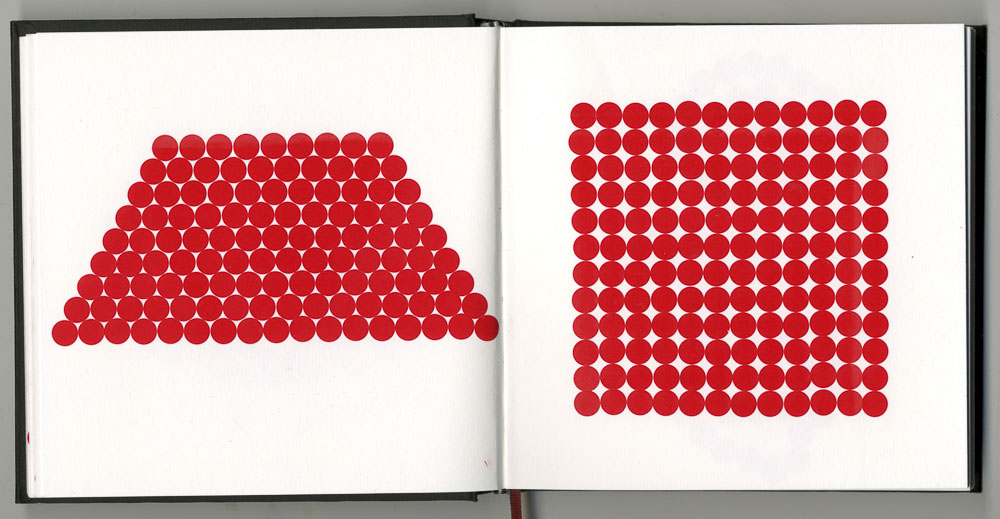
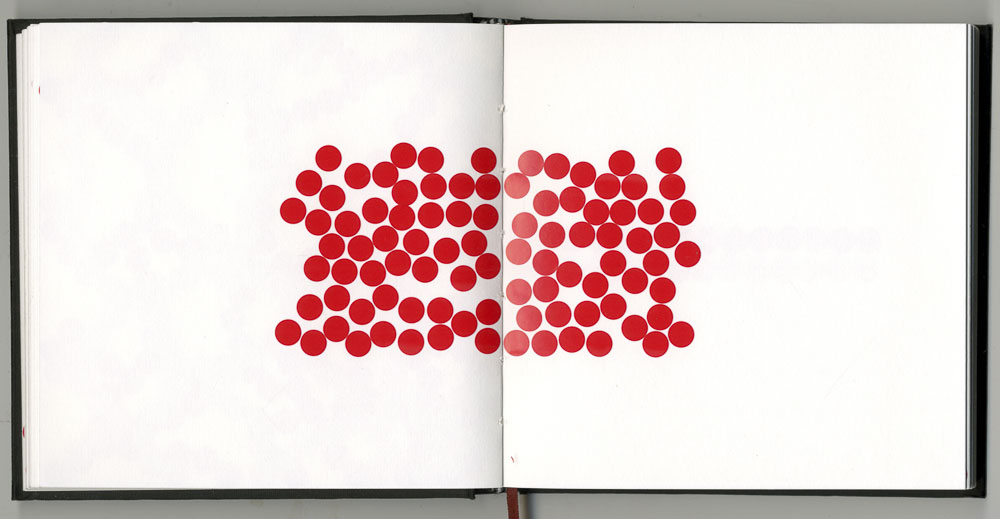
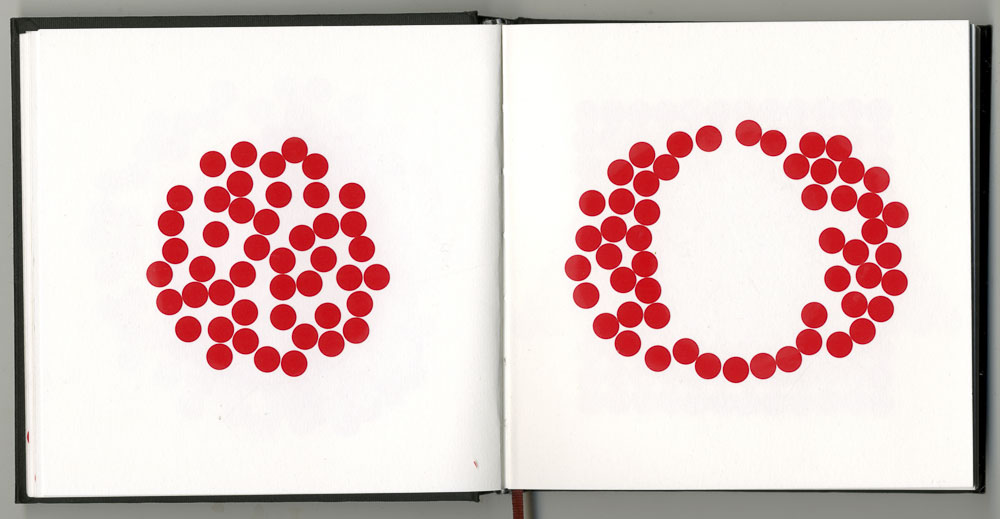
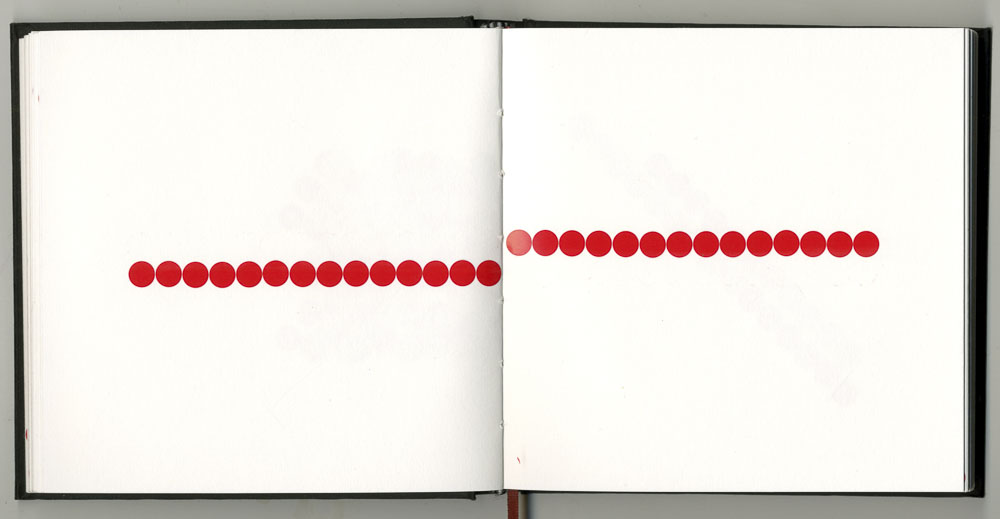
Untitled
2025-
Medium, Stickers on paper
Dimensions, 14 x 14 cm
Few symbols in the art world carry as much weight and intrigue as the little red dot. At first glance, it’s a simple sticker, but its presence transforms the meaning of an artwork, signalling ownership, value, and desire. This experimentation explores the conceptual depth behind red dots and why they continue to fascinate artists, collectors, and audiences alike.
In galleries, a red dot traditionally indicates that a work has been sold. It’s a shorthand for value a tiny circle that speaks volumes about exchange, recognition, and worth. The dot becomes a marker of transition: the artwork moves from public display to private possession. This act of marking introduces questions about commodification how does a small sticker redefine an object’s cultural and economic status? Placing a red dot is more than a transaction; it’s a performative gesture. It asserts ownership, signalling that someone has claimed the work. Conceptually, this resonates with territorial marking like how humans and animals leave signs of presence. The dot becomes a symbolic “signature,” bringing buyer and artwork closer through a single, playful intervention.
Beyond its commercial function, the red dot invites playful reinterpretation. Artists have appropriated this symbol to critique market systems, question authorship, or explore visibility. A field of red dots can transform into a minimalist composition, a commentary on consumer culture, or even a participatory artwork where viewers “claim” space. Its simplicity makes it endlessly adaptable a tool for humour, irony, and conceptual depth.
Faceless Dice, Chance, Control, and the Language of Play
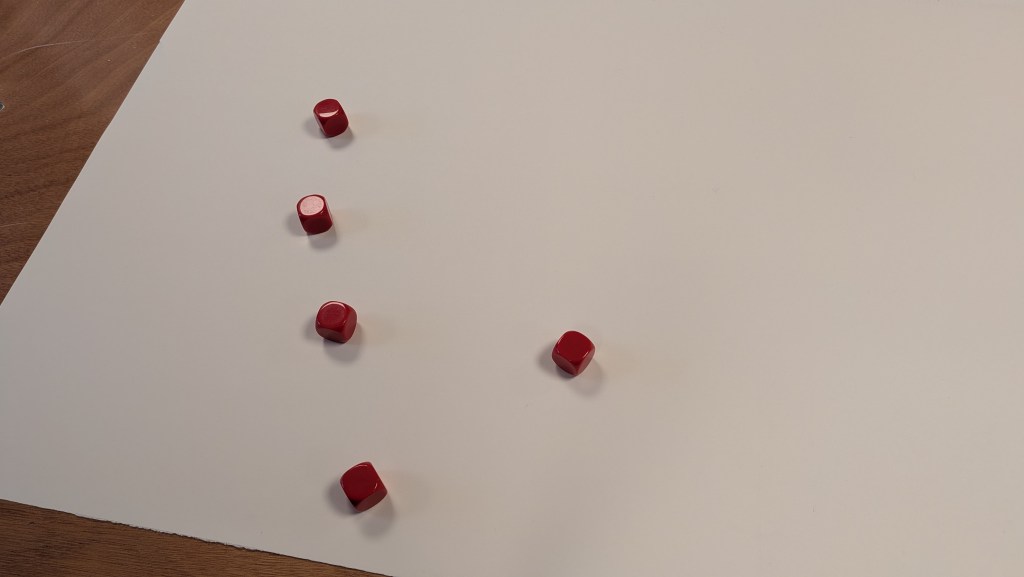
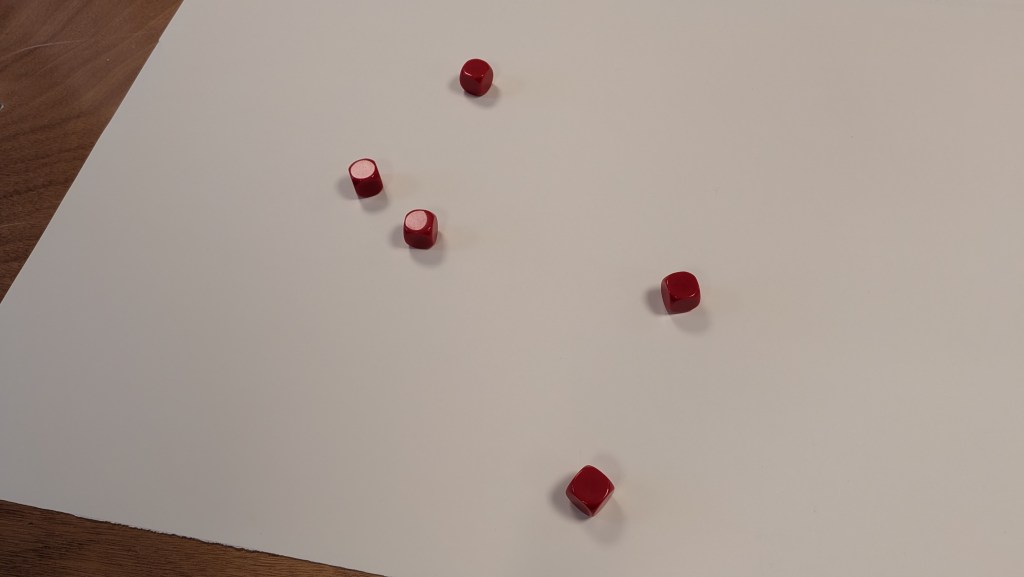
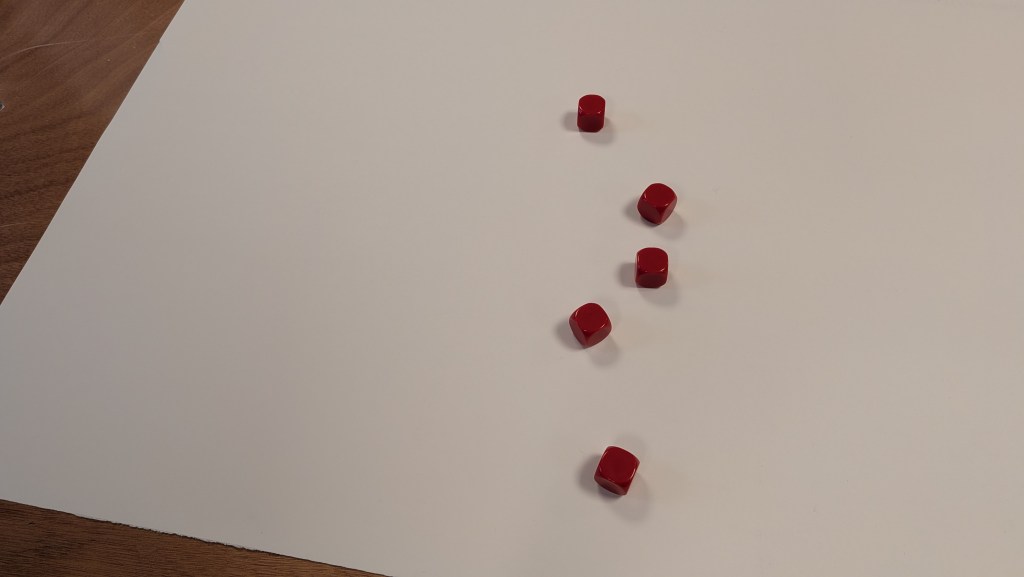
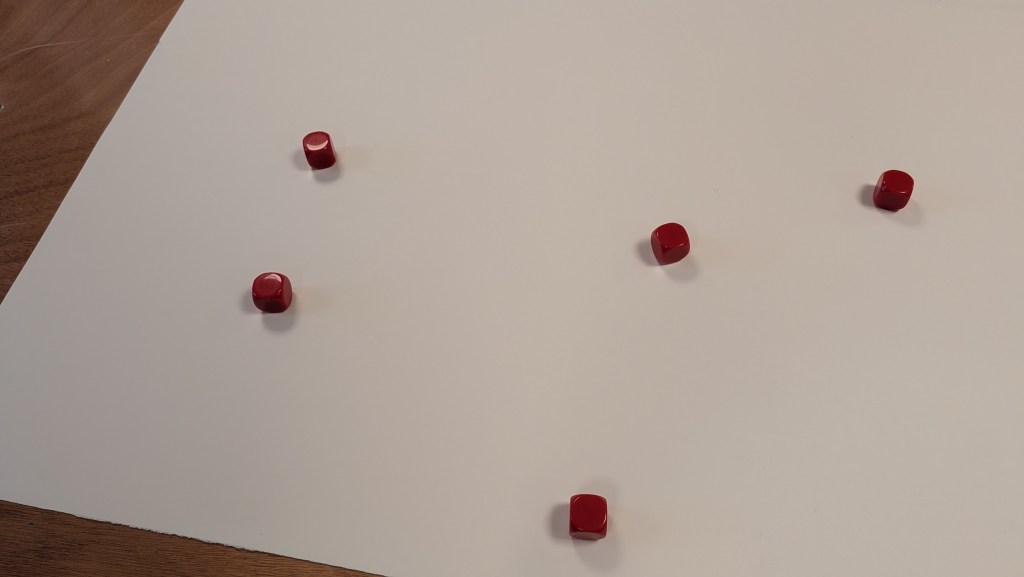
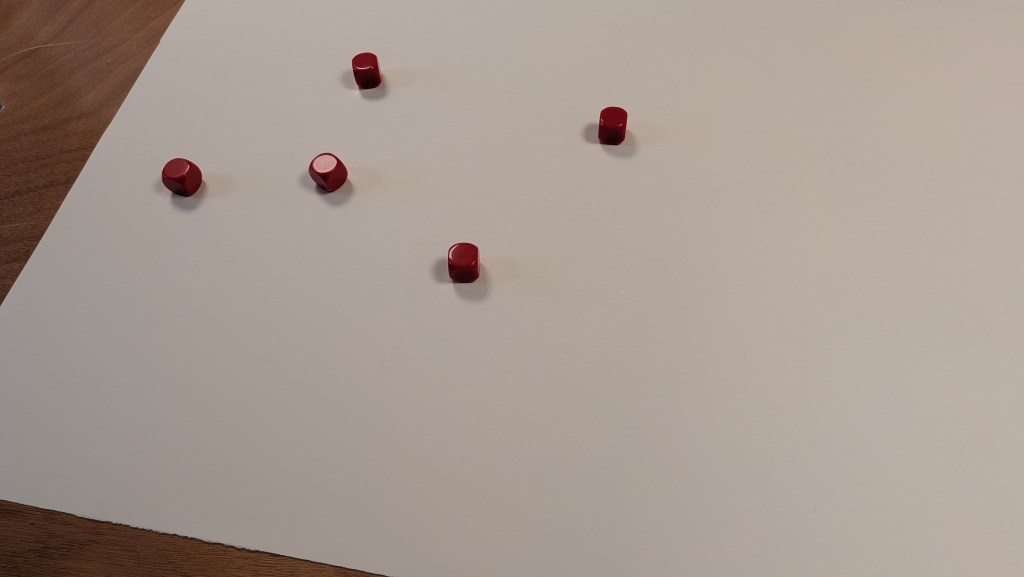
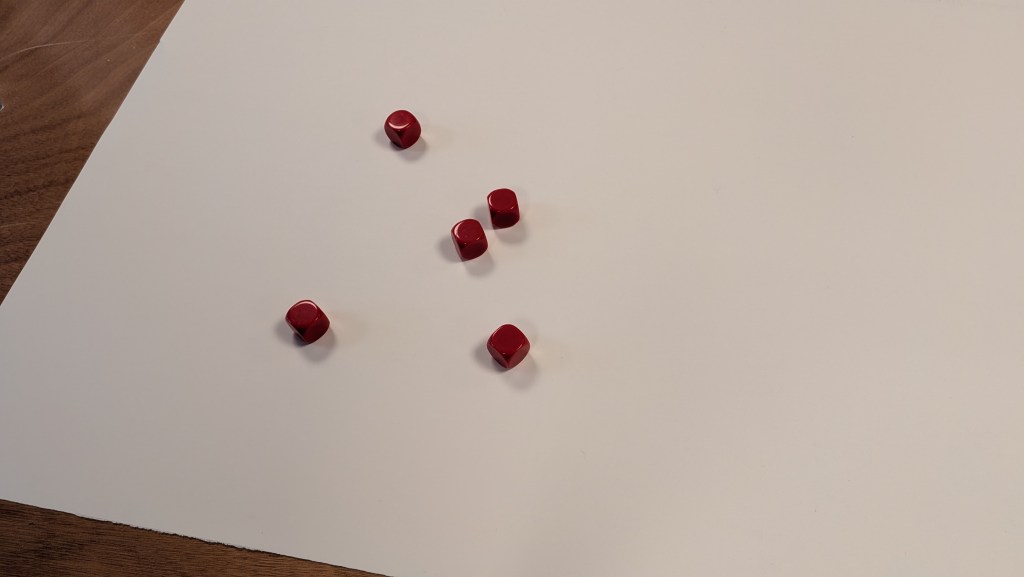
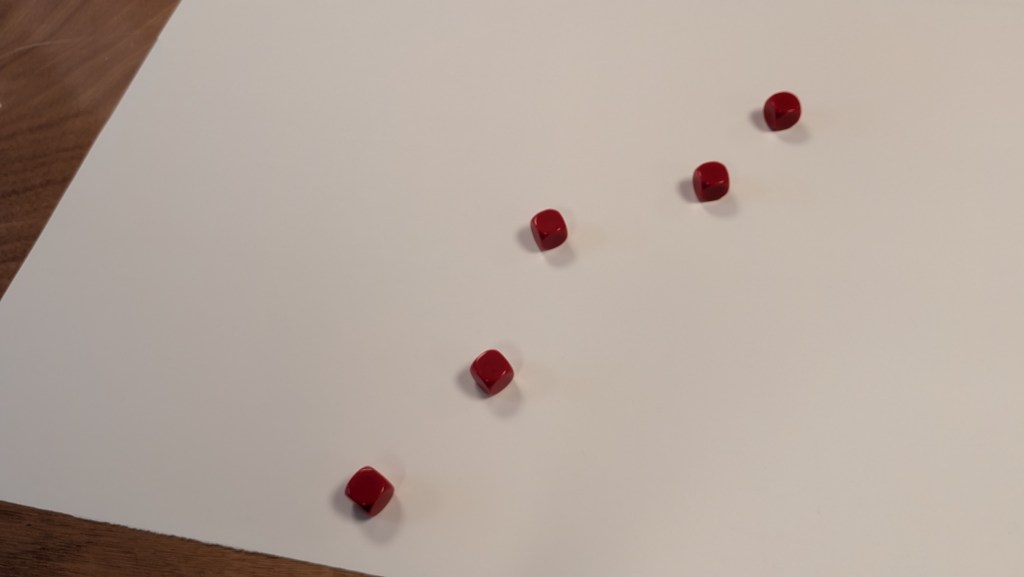
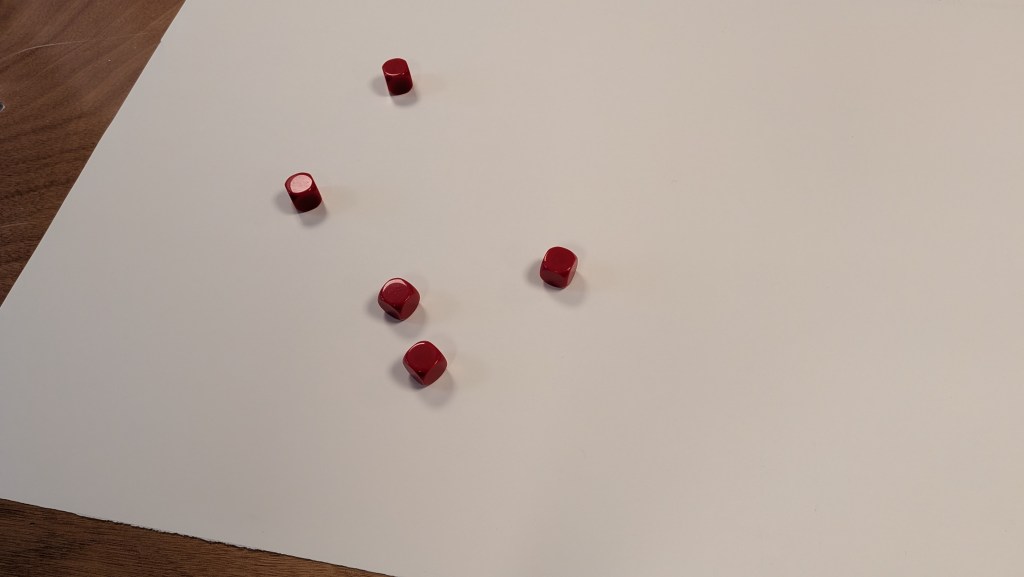
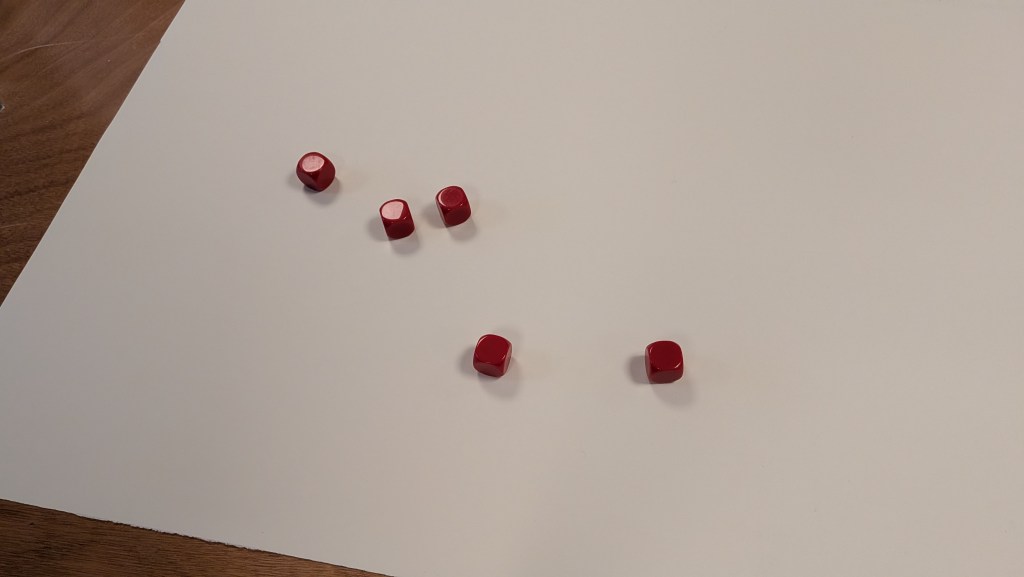
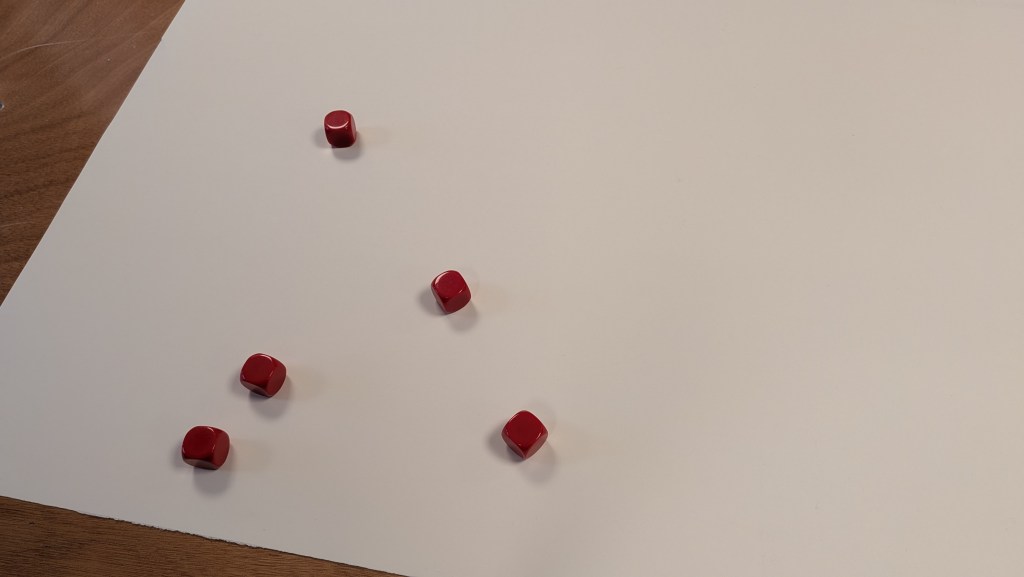
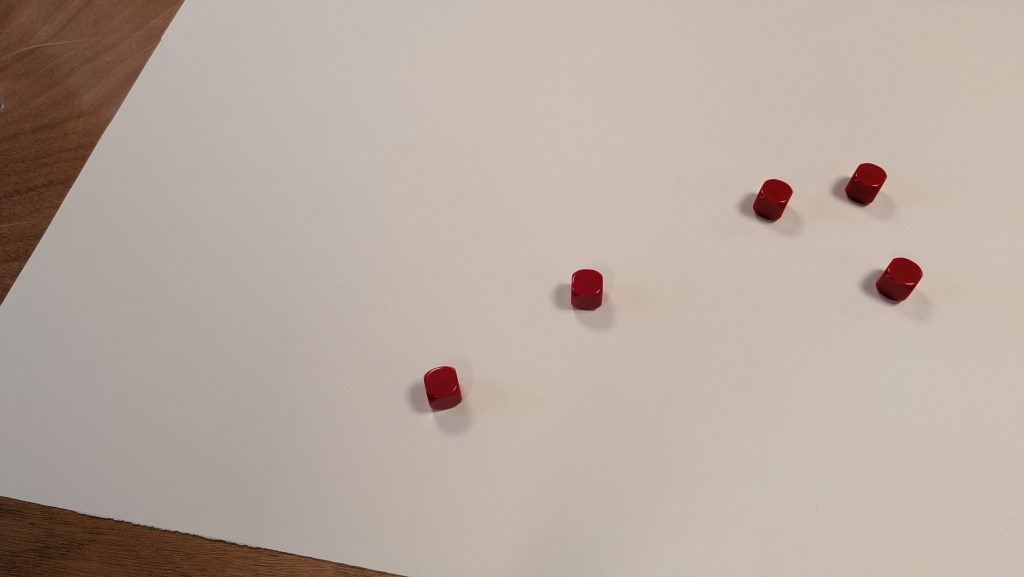
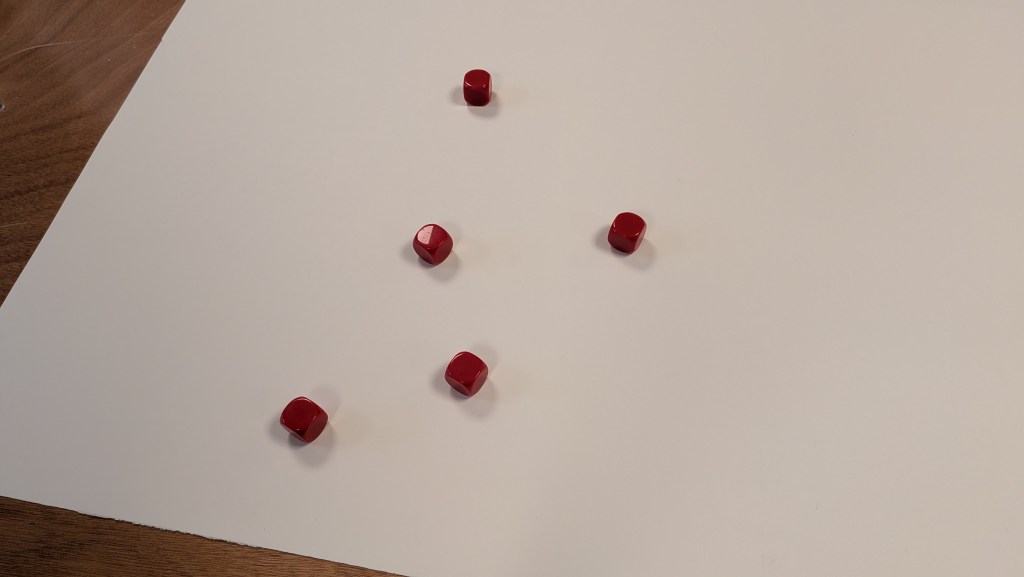
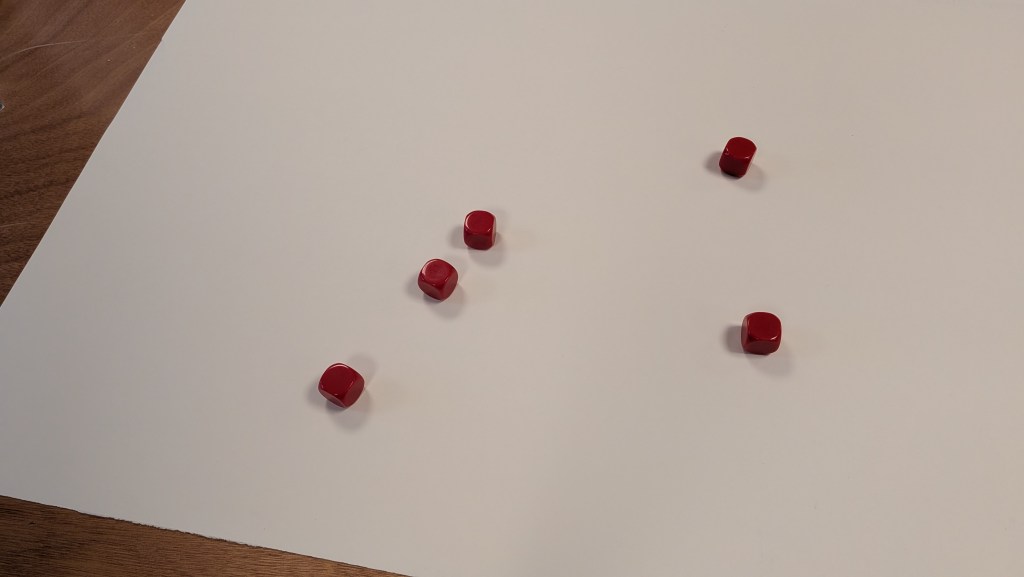
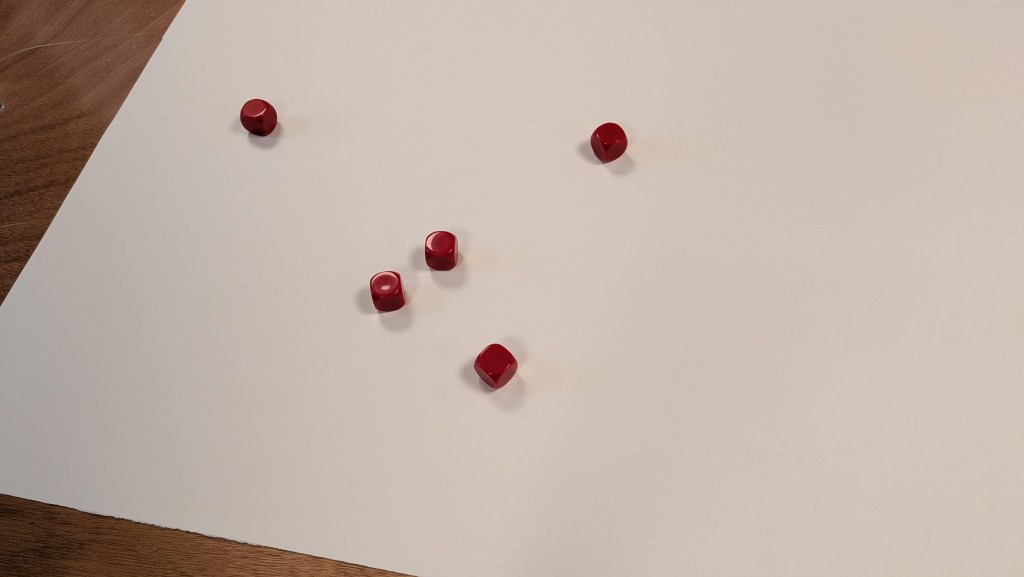
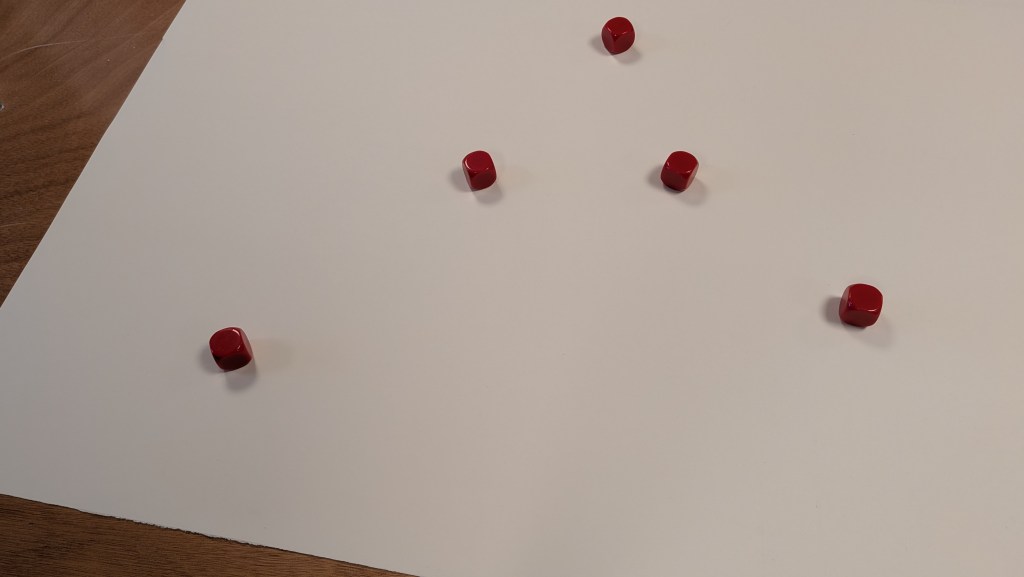
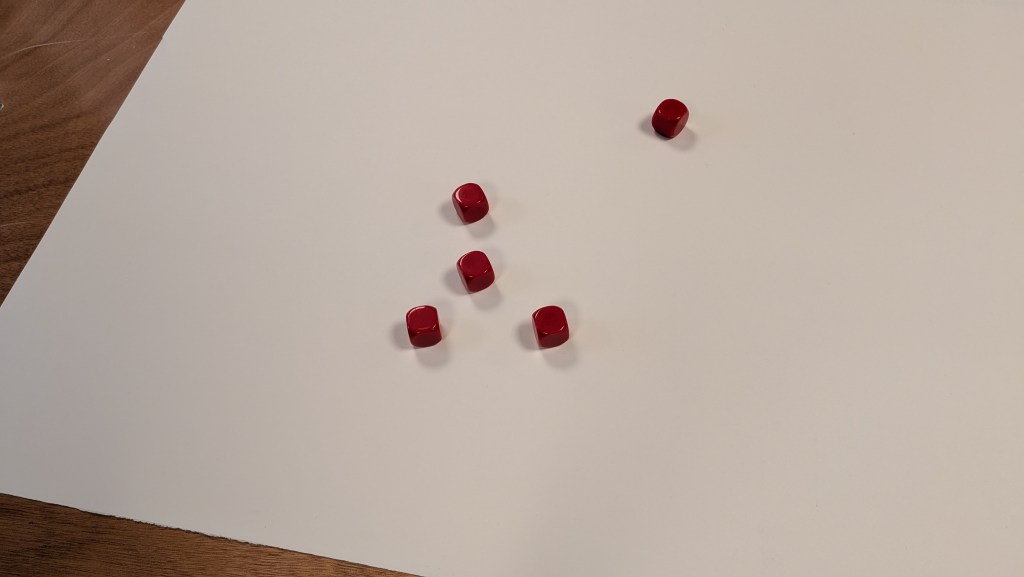
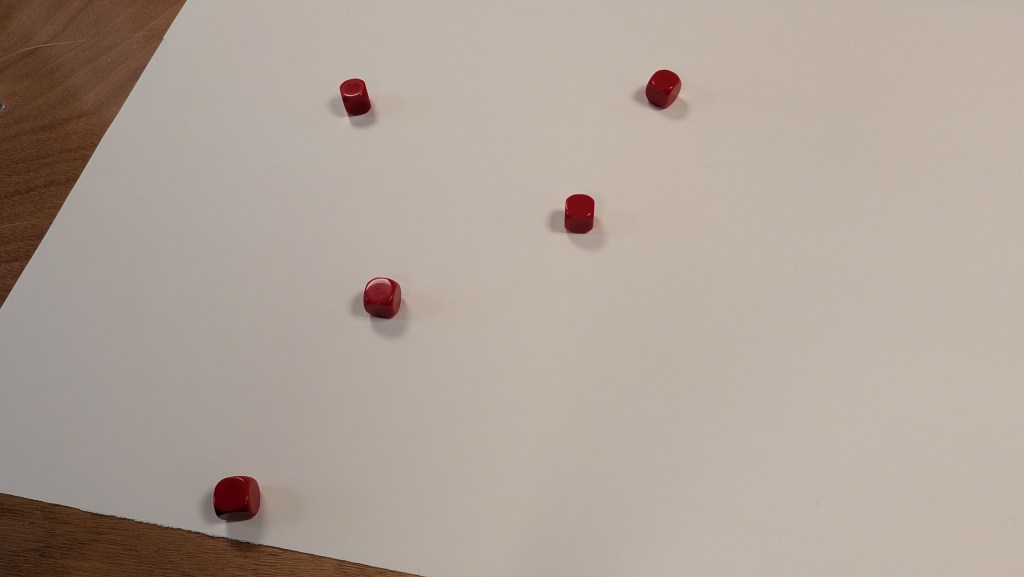

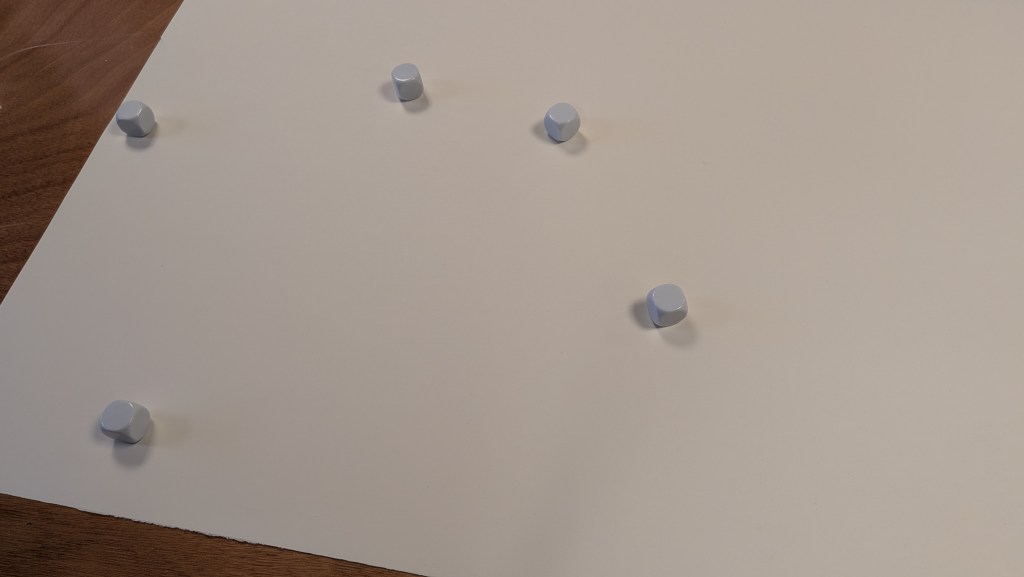
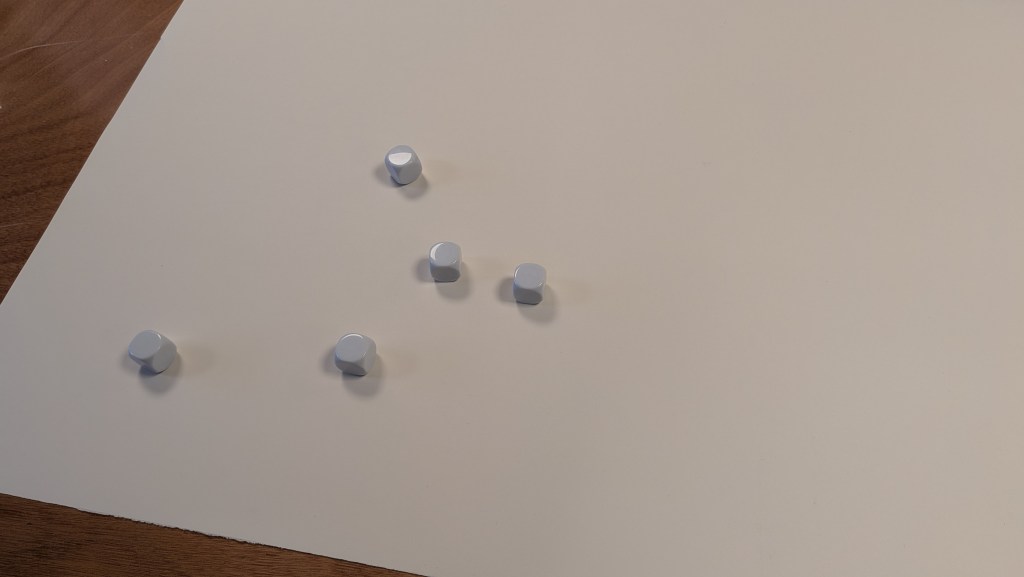
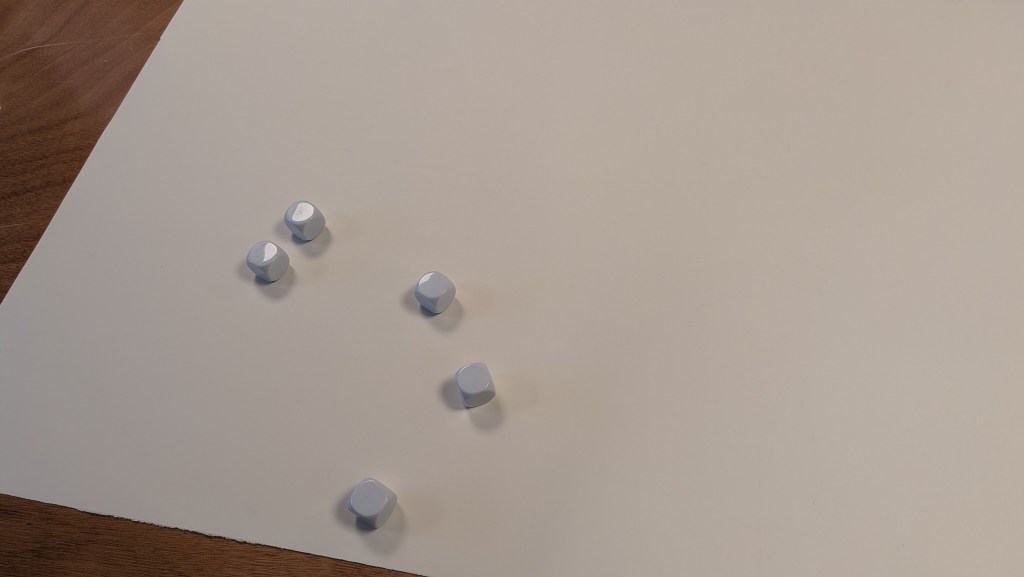
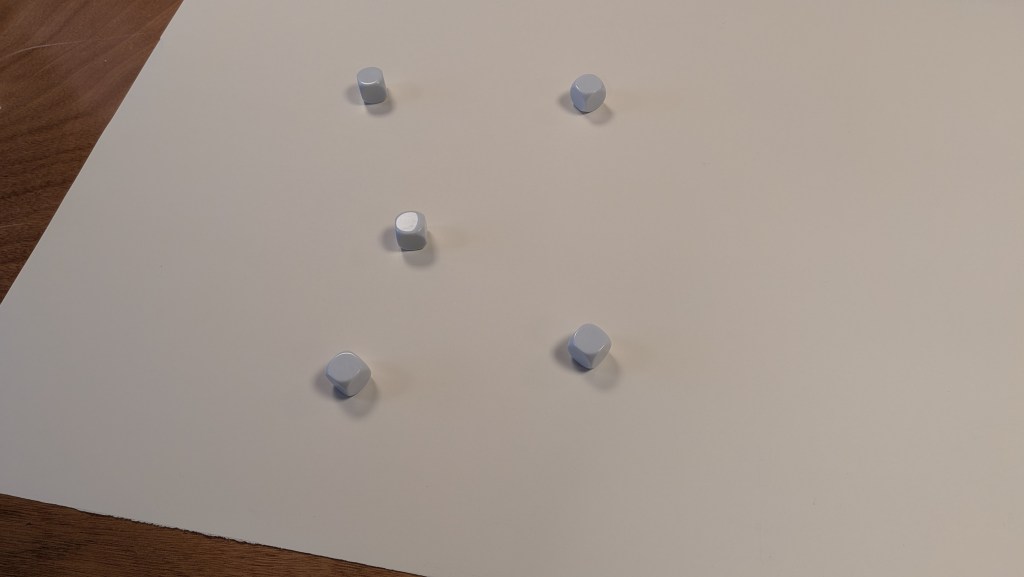
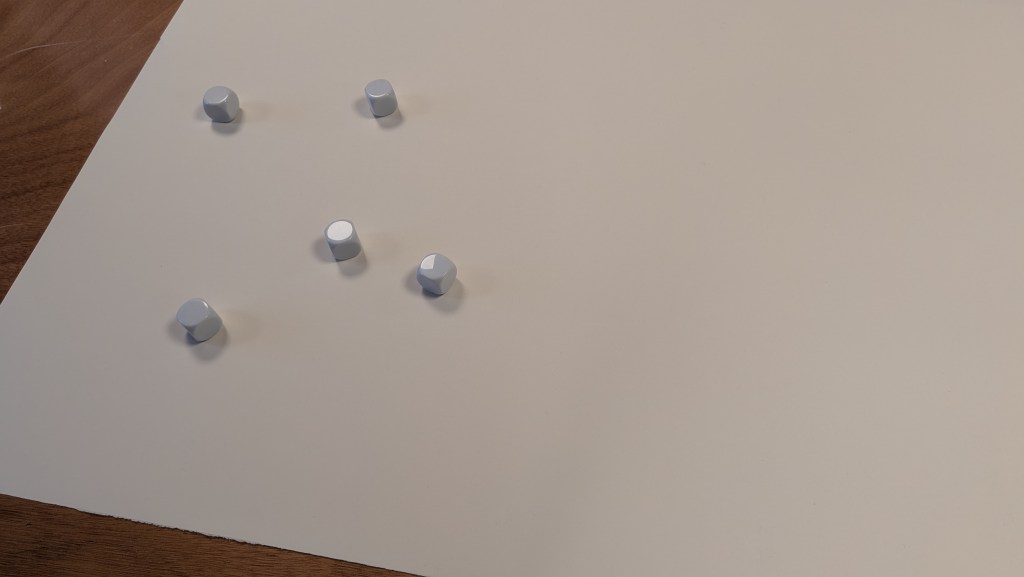
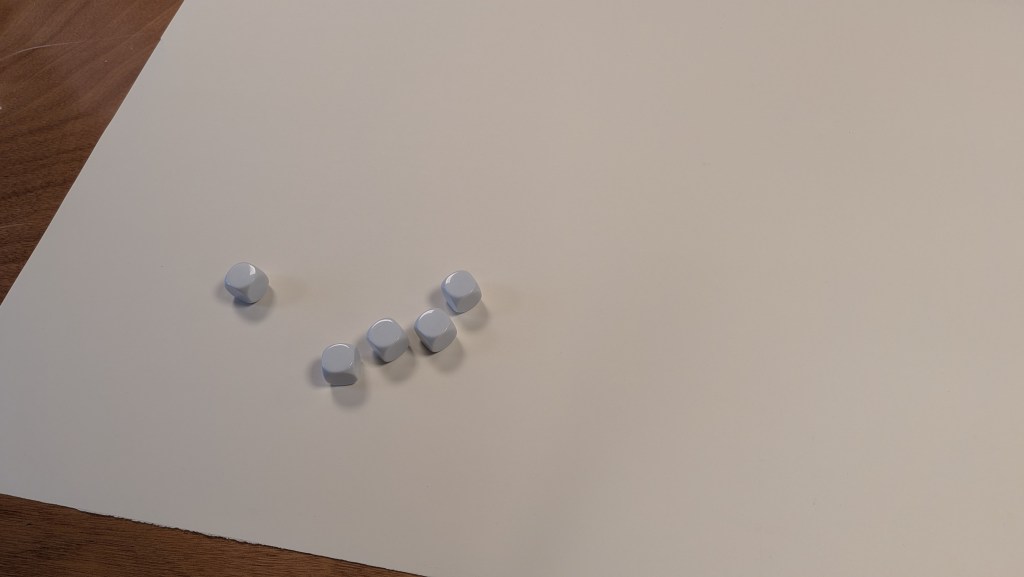
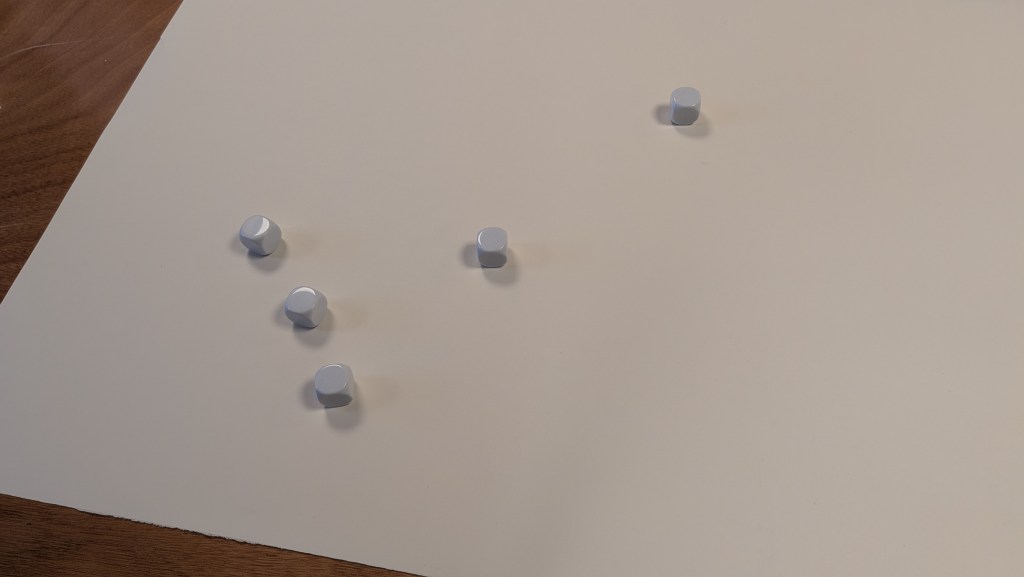
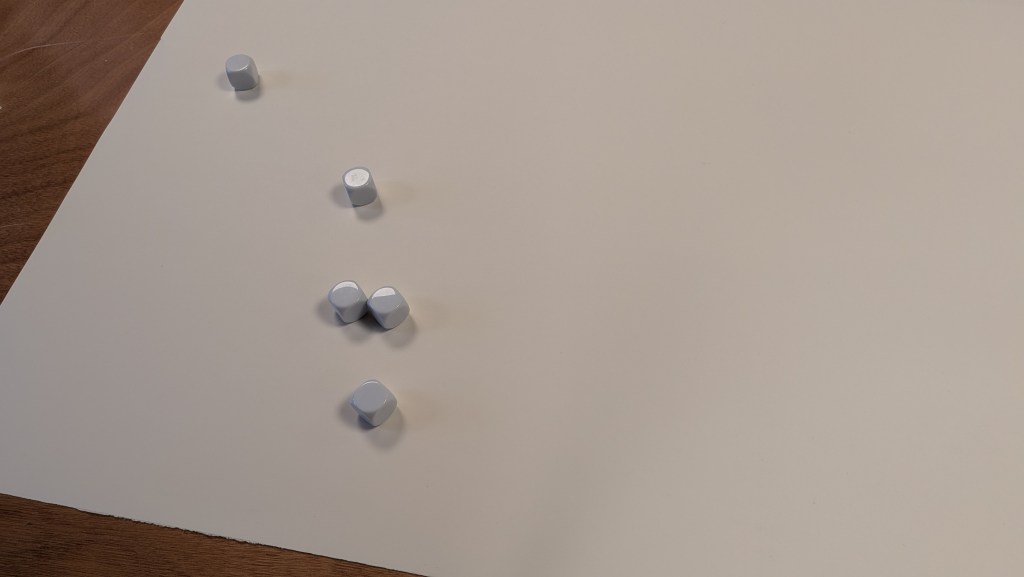
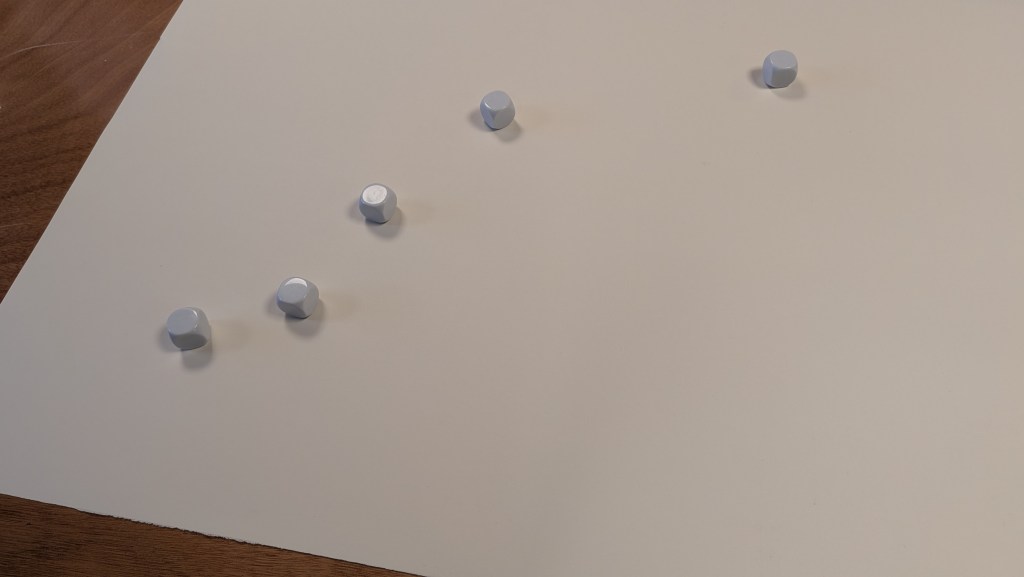
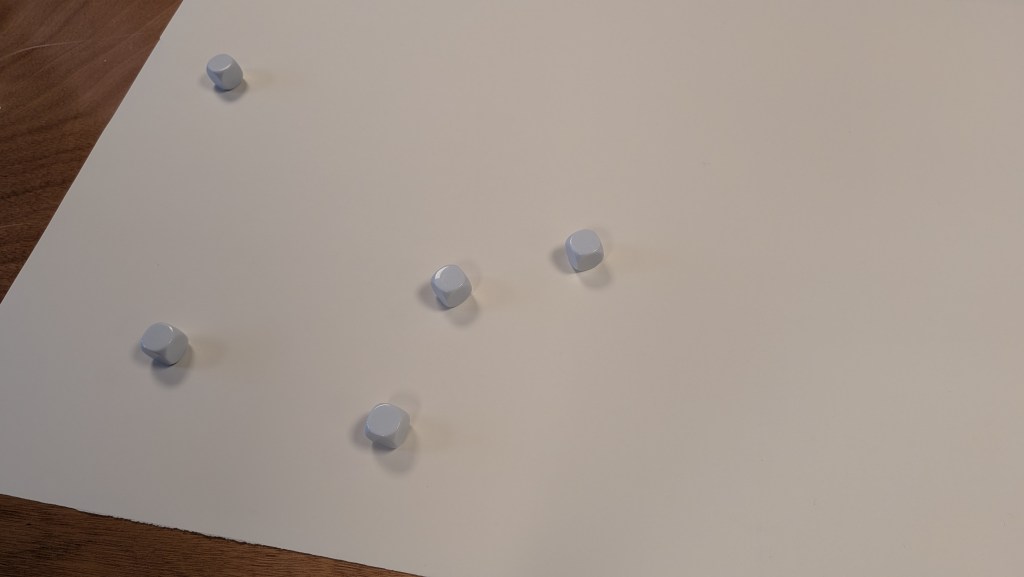
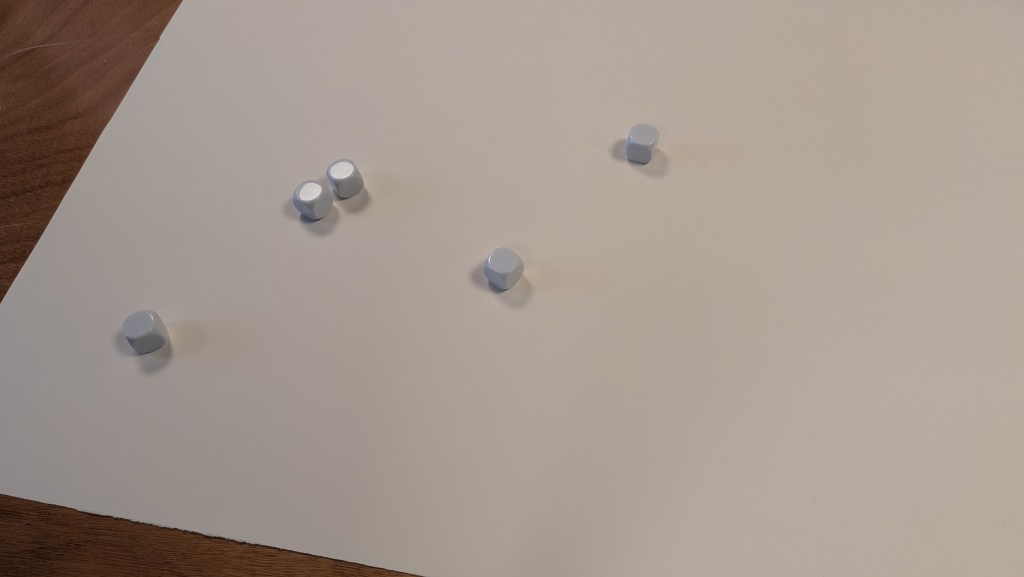
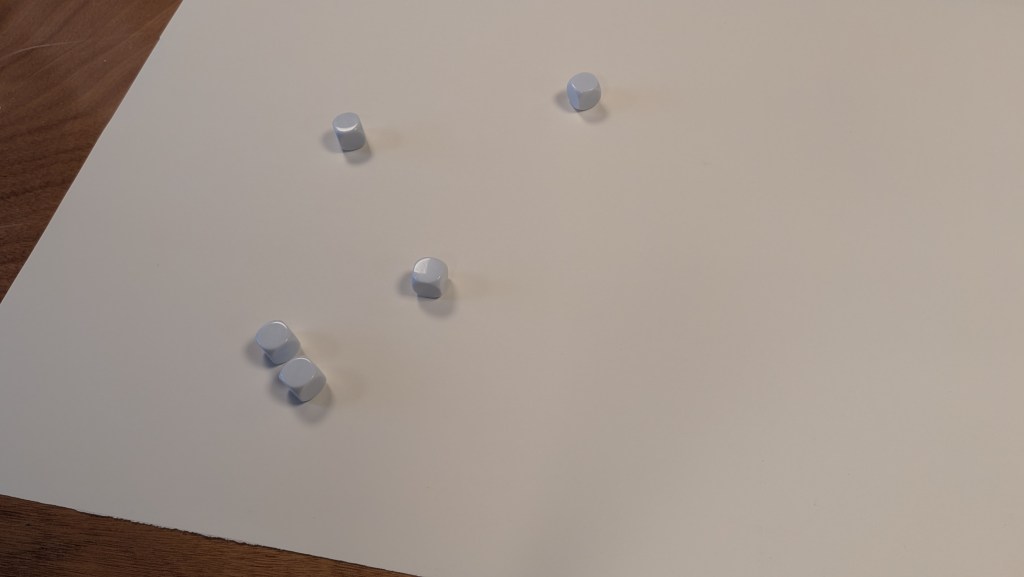
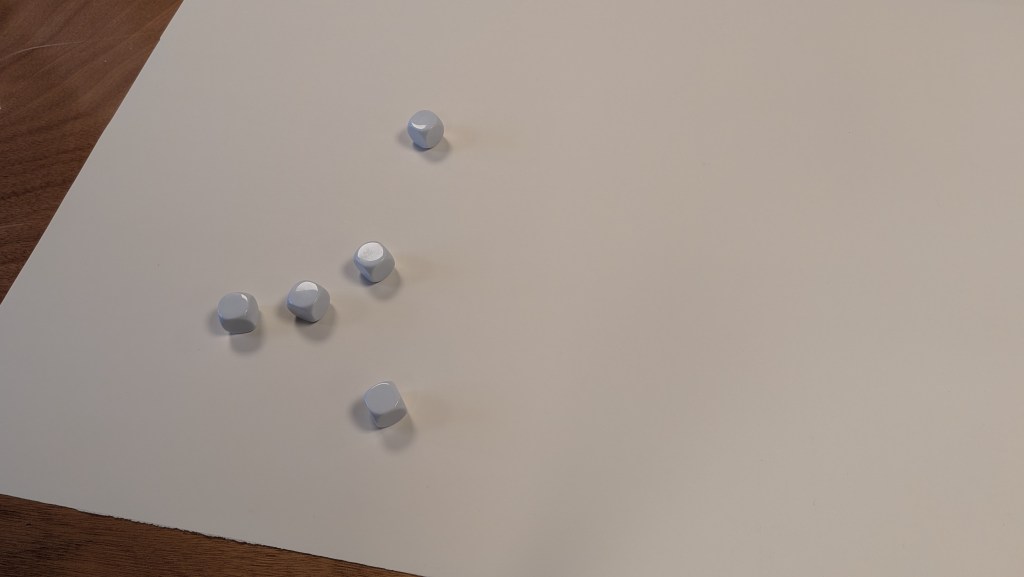
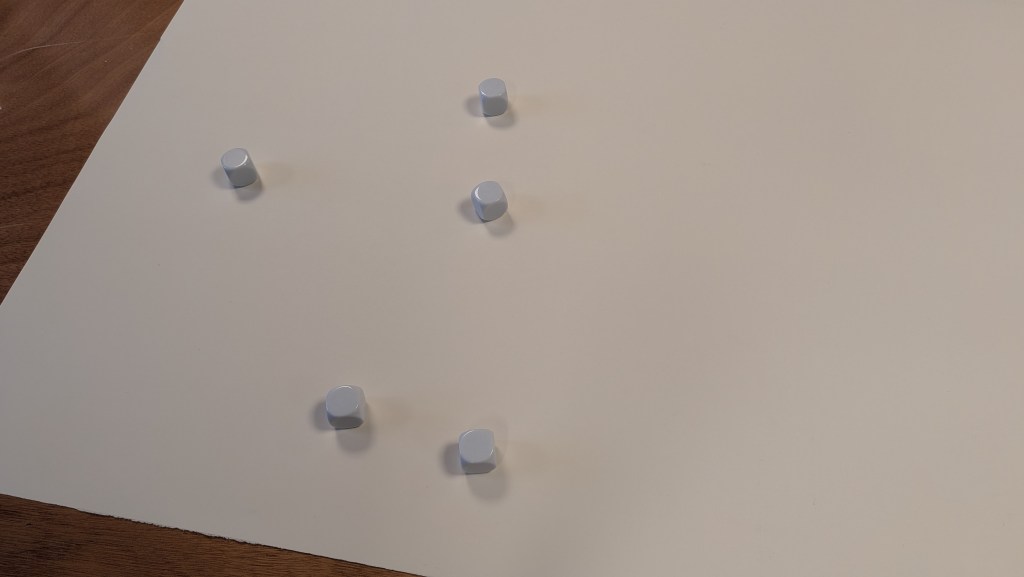
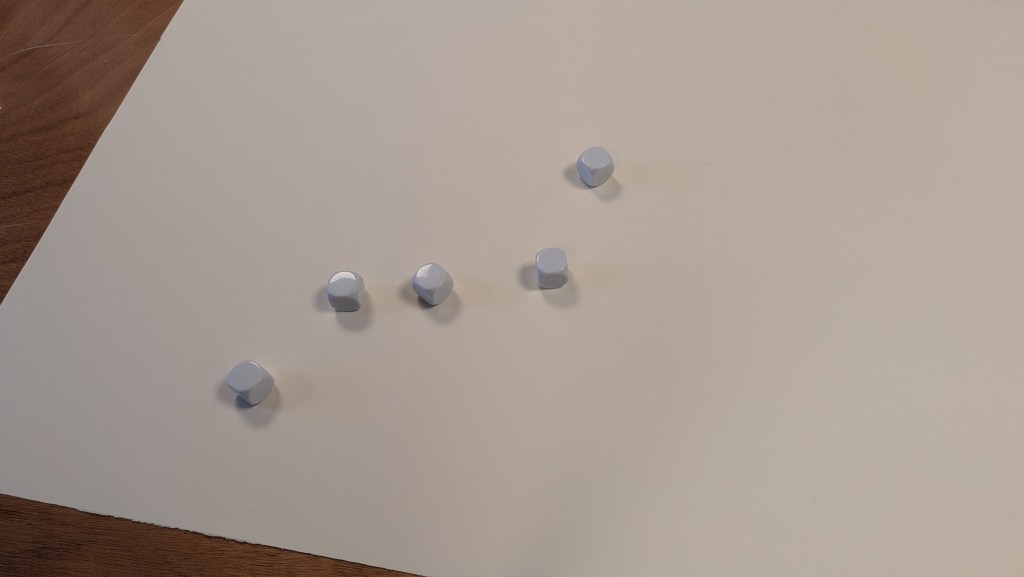
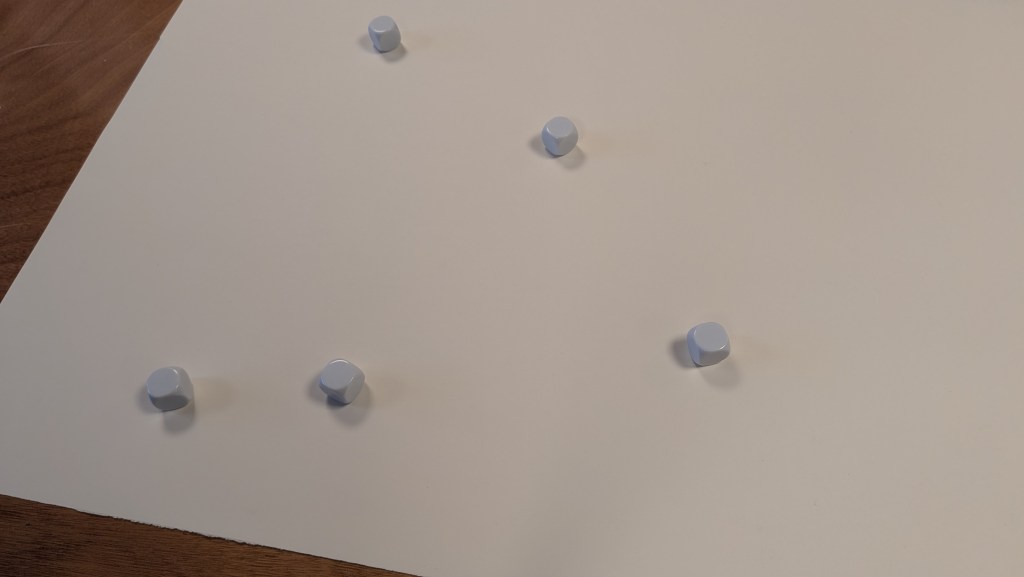
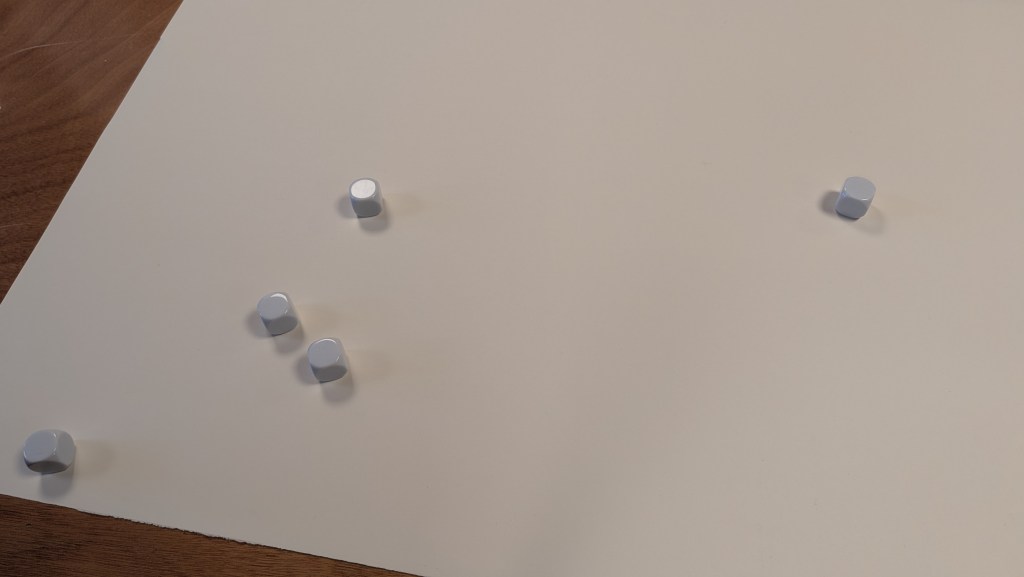
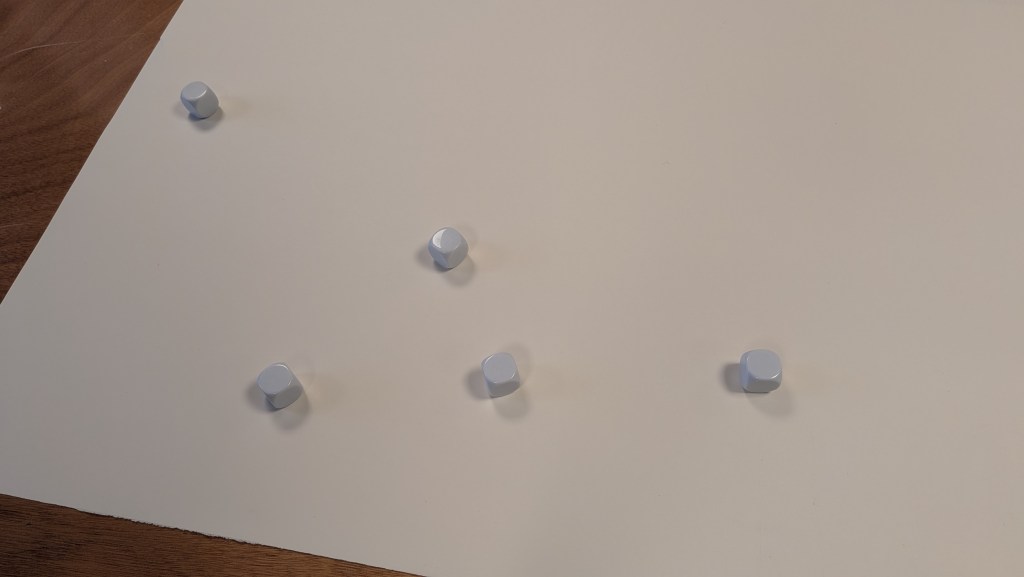
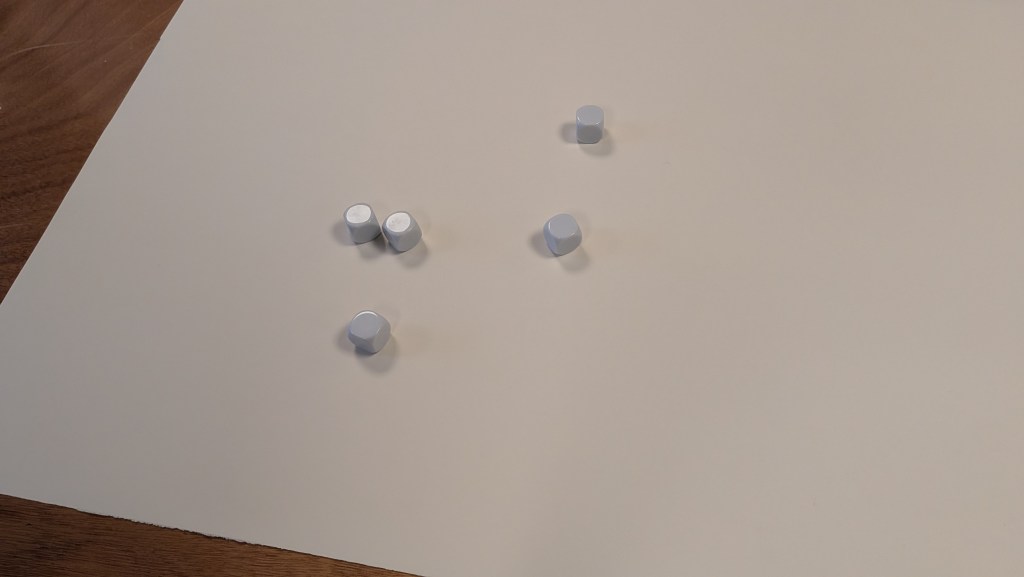
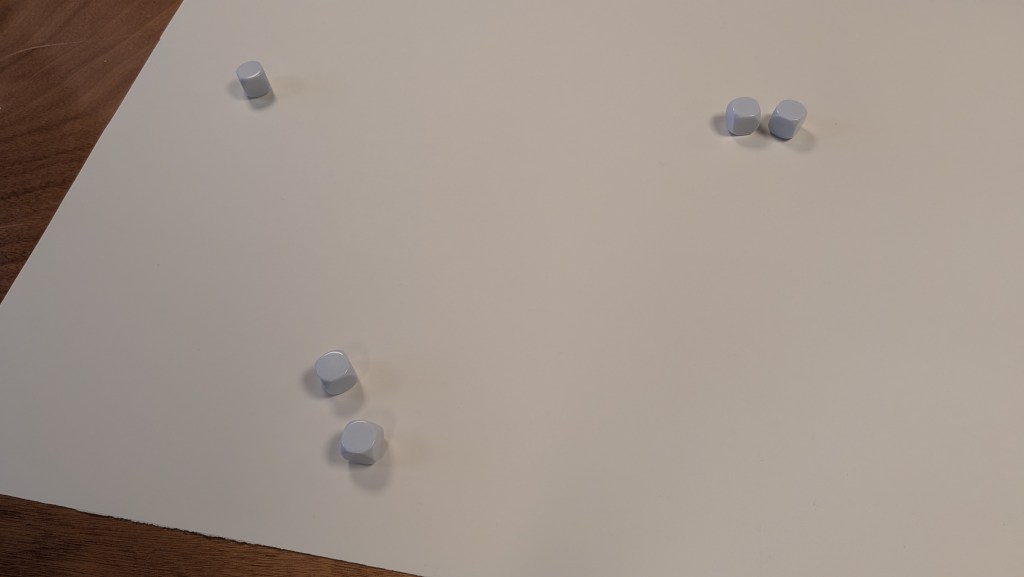
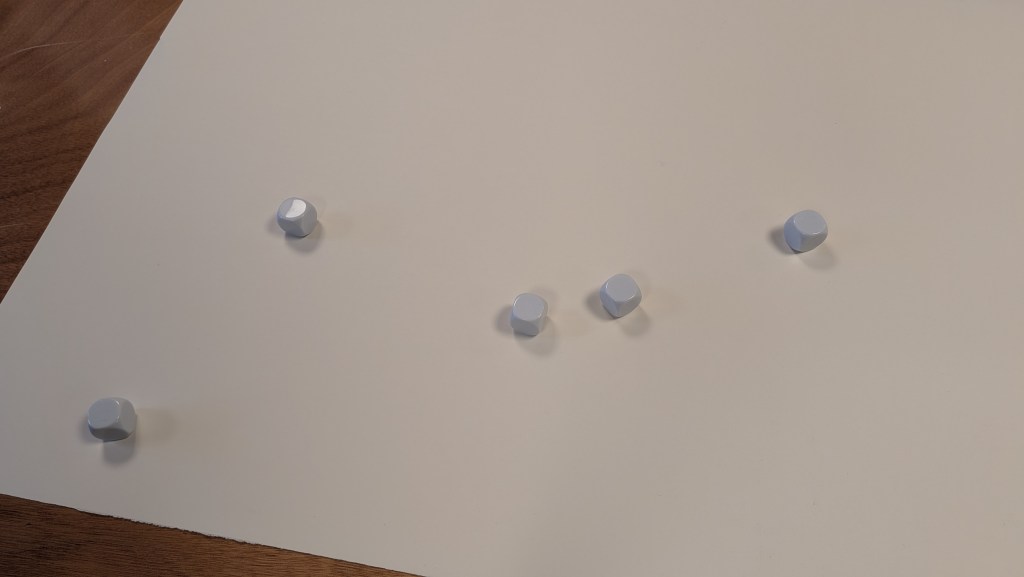
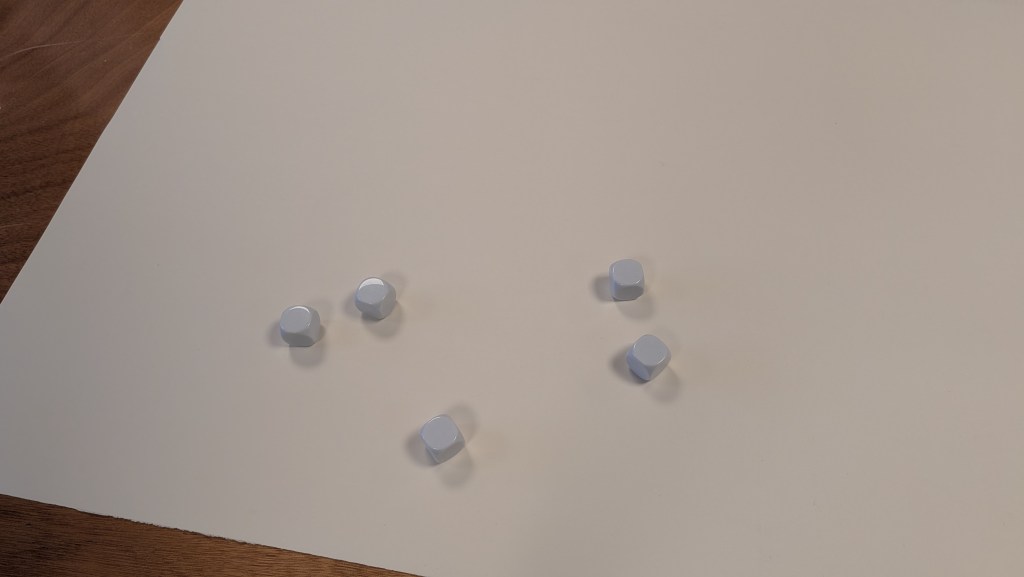
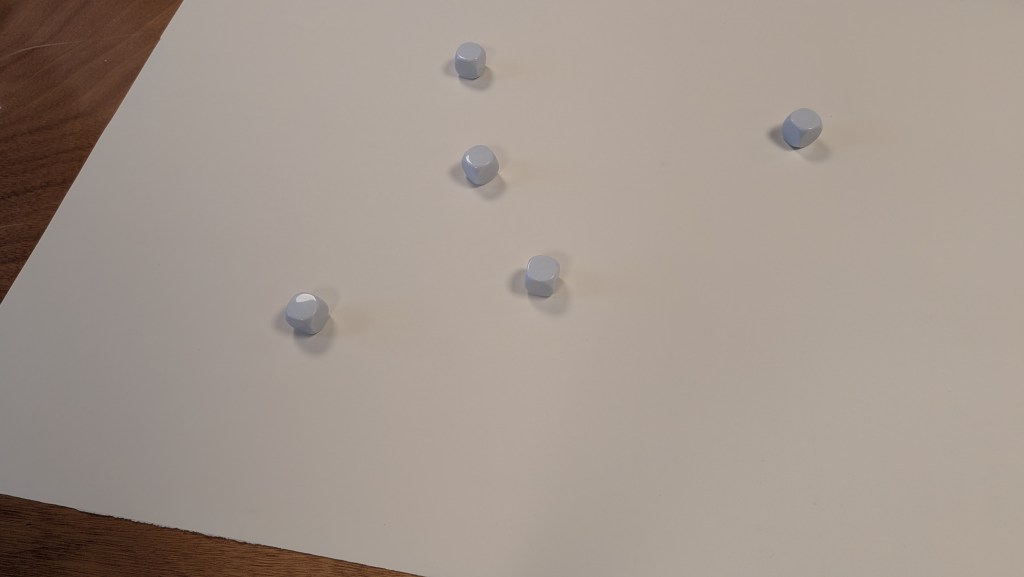
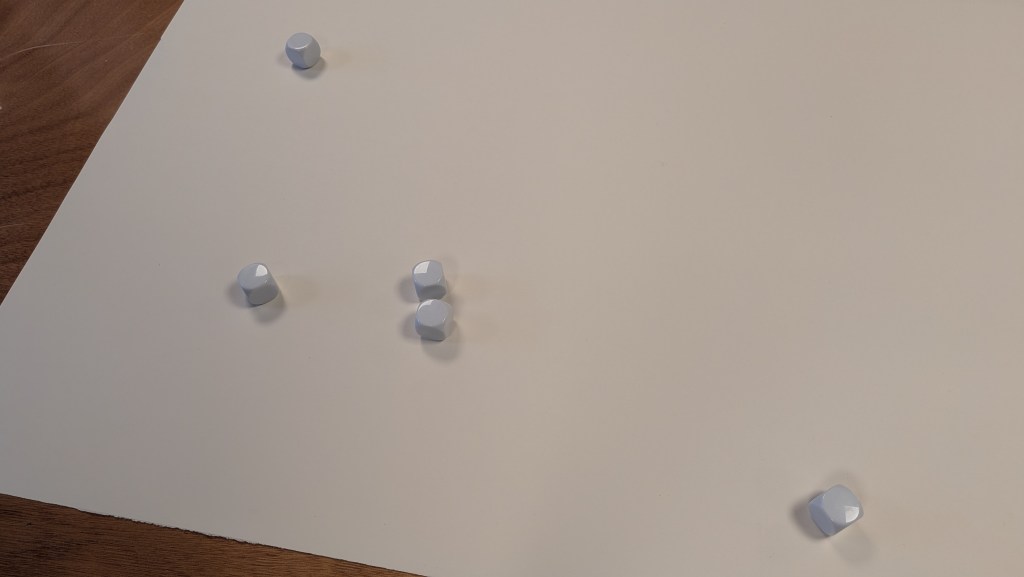
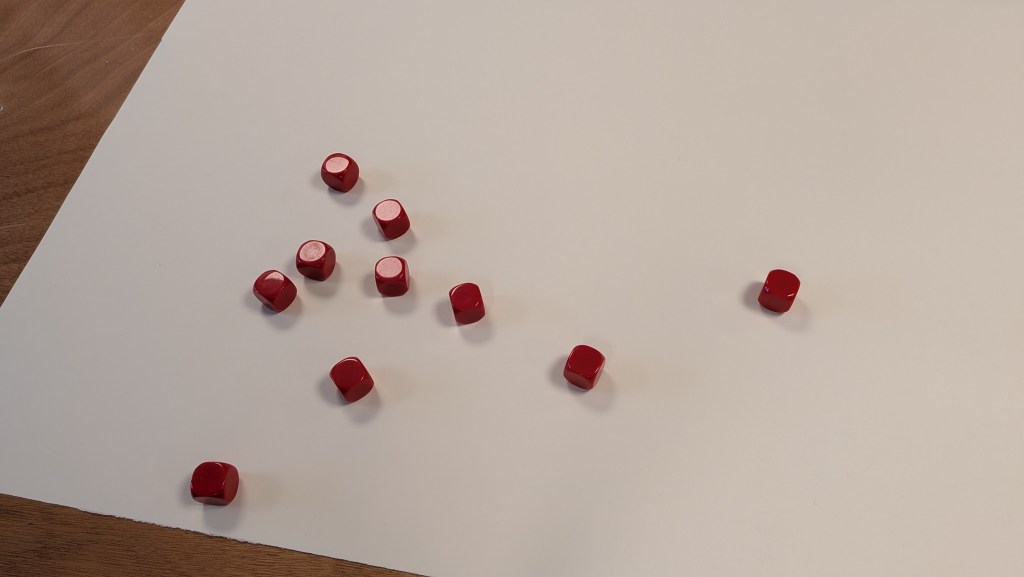
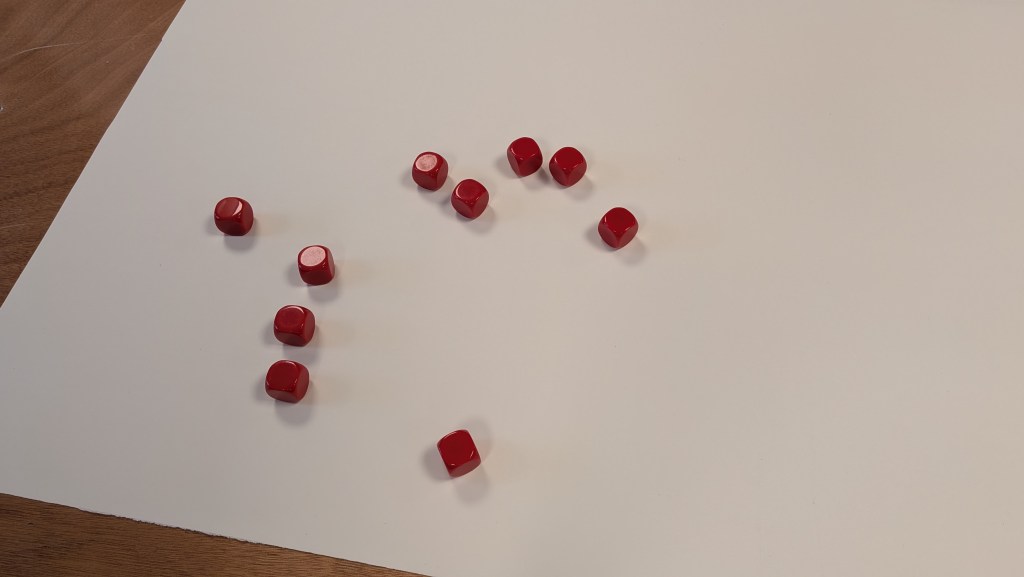
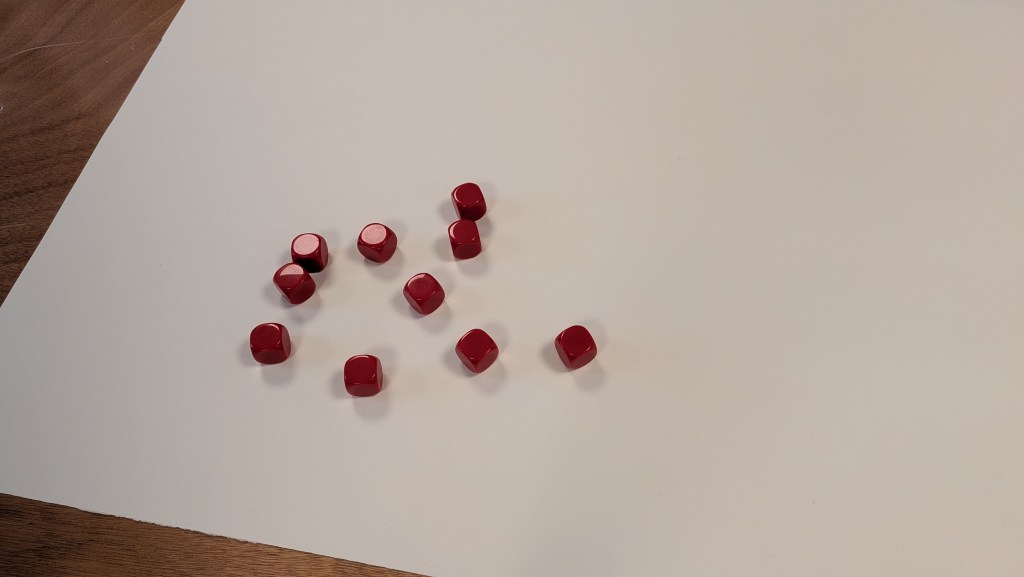
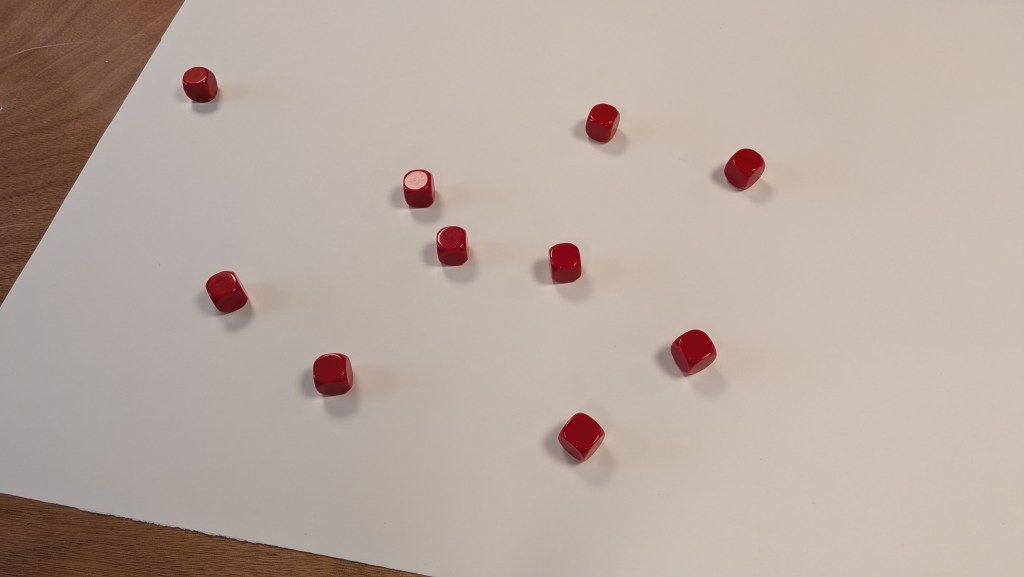
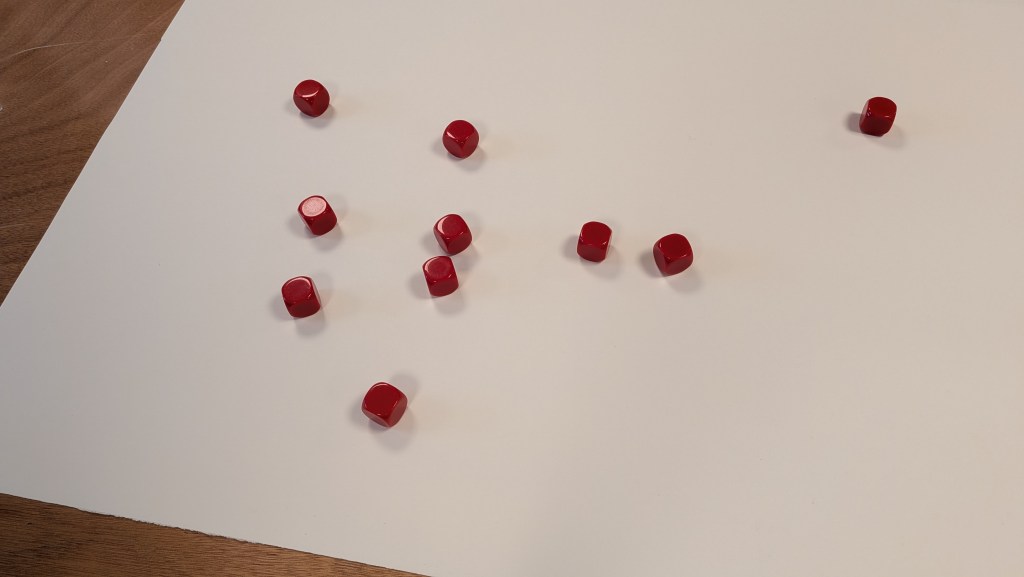
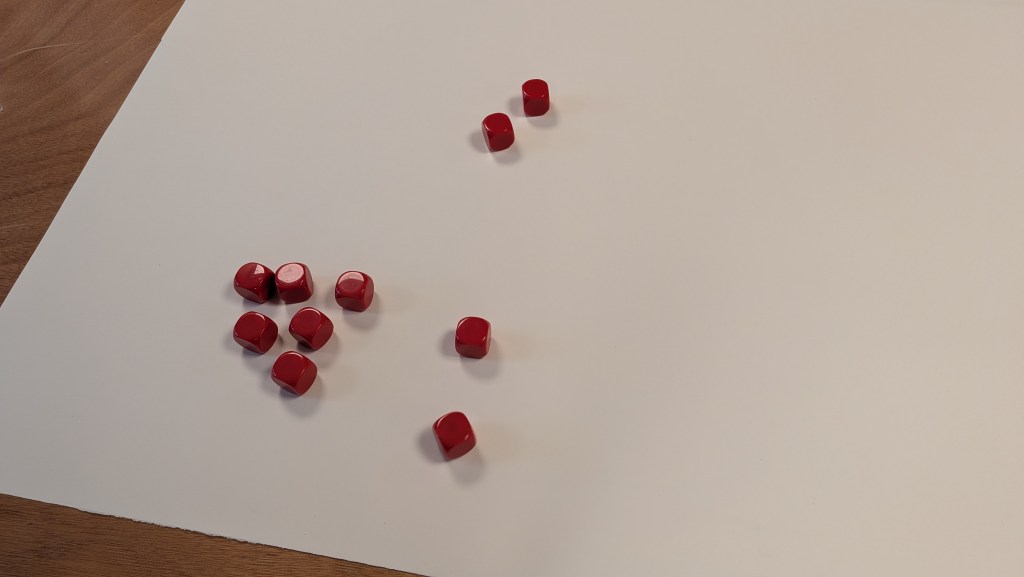
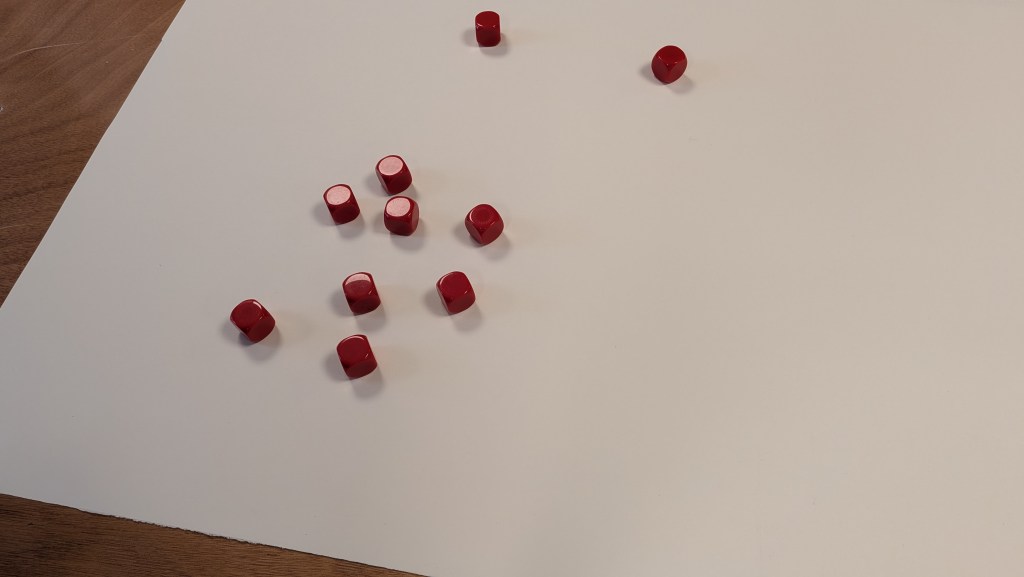
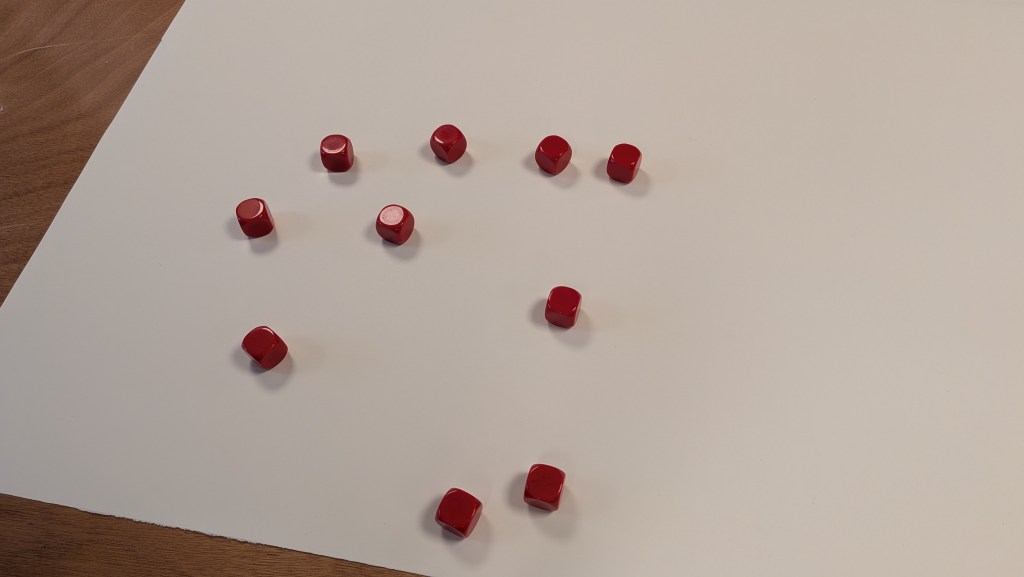
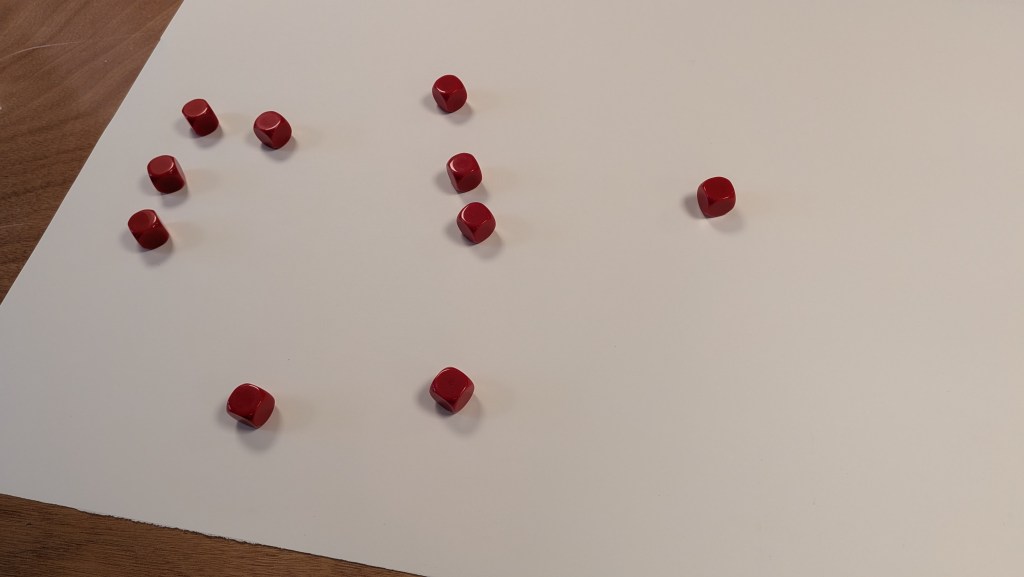
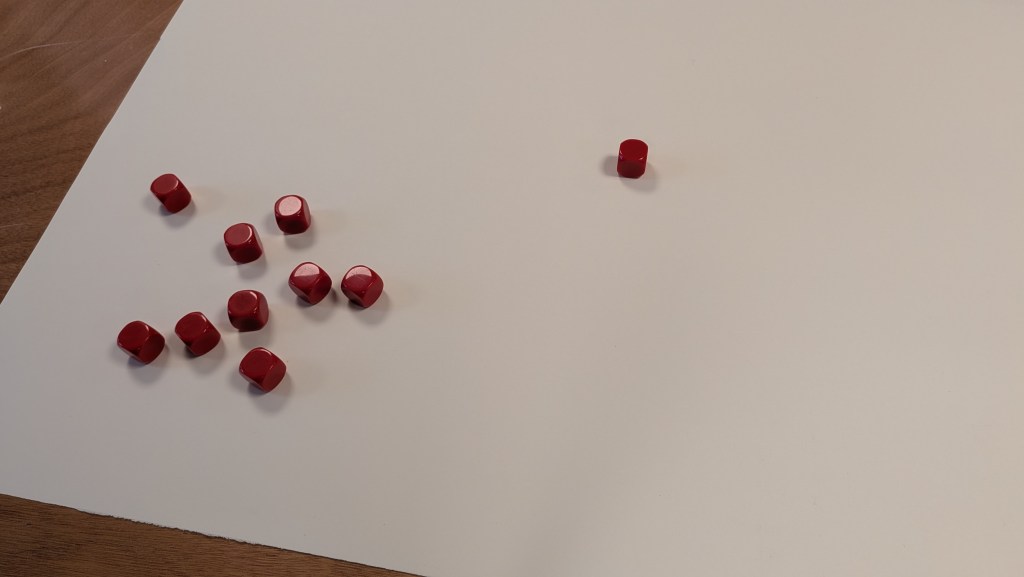
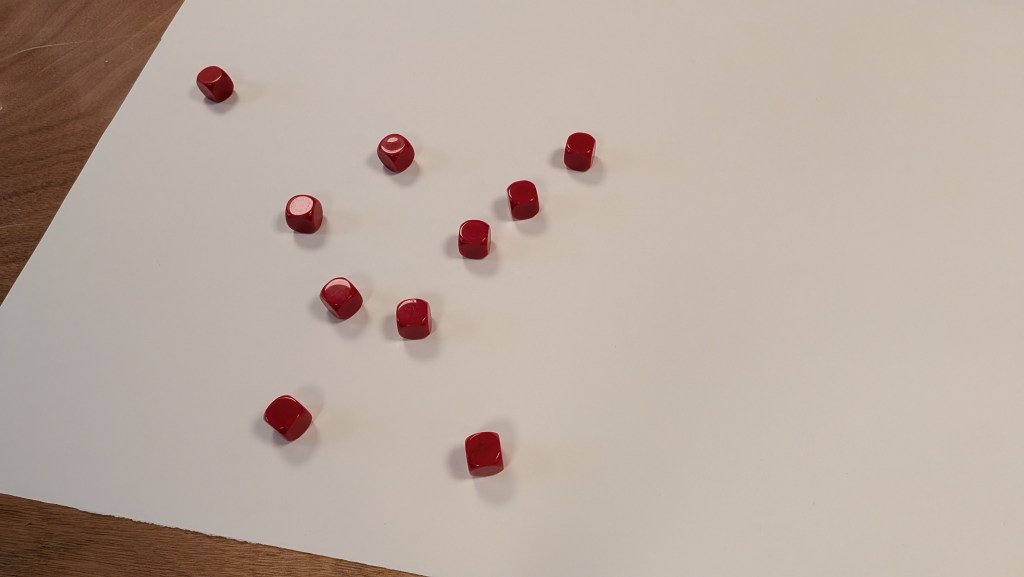
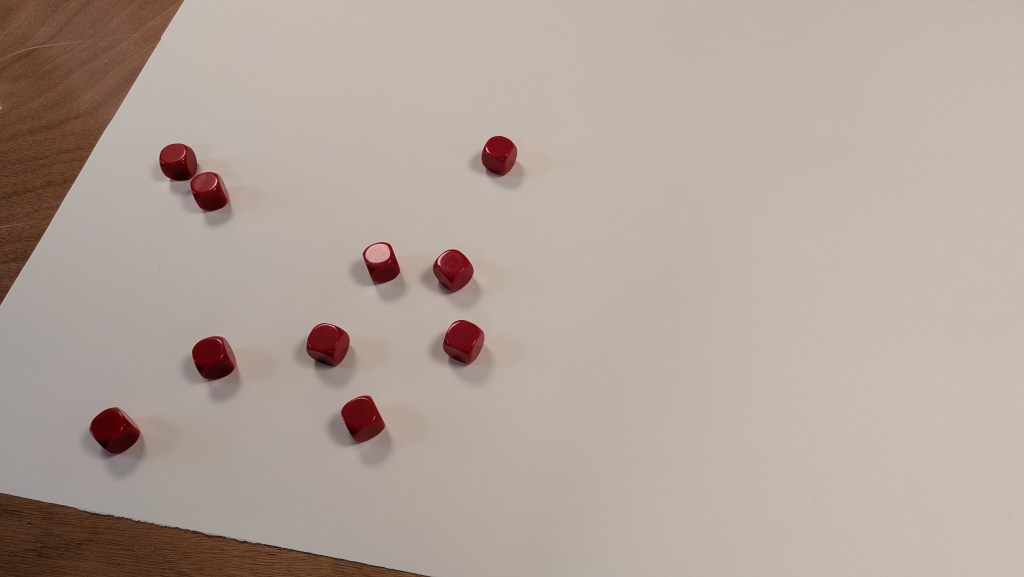
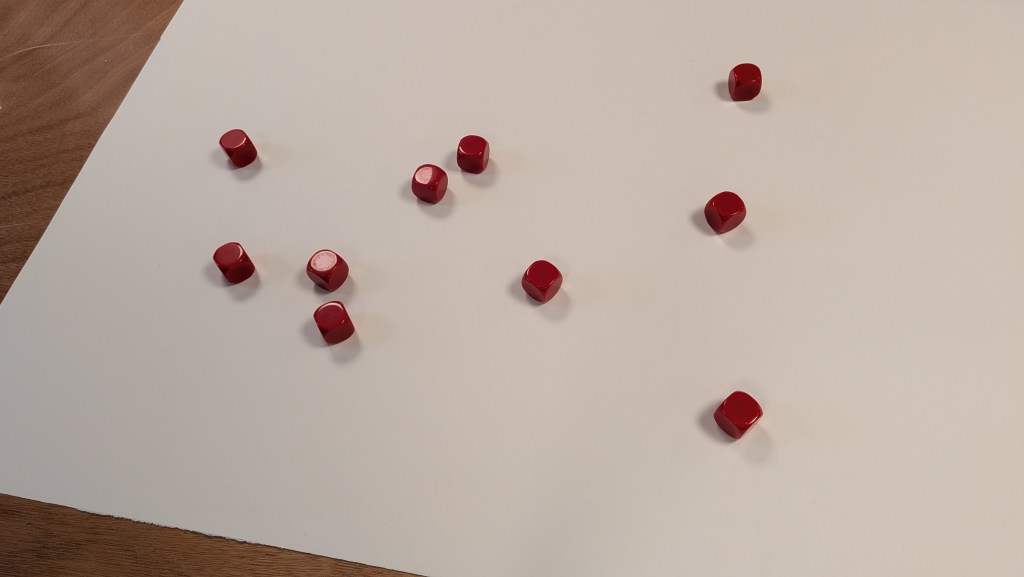
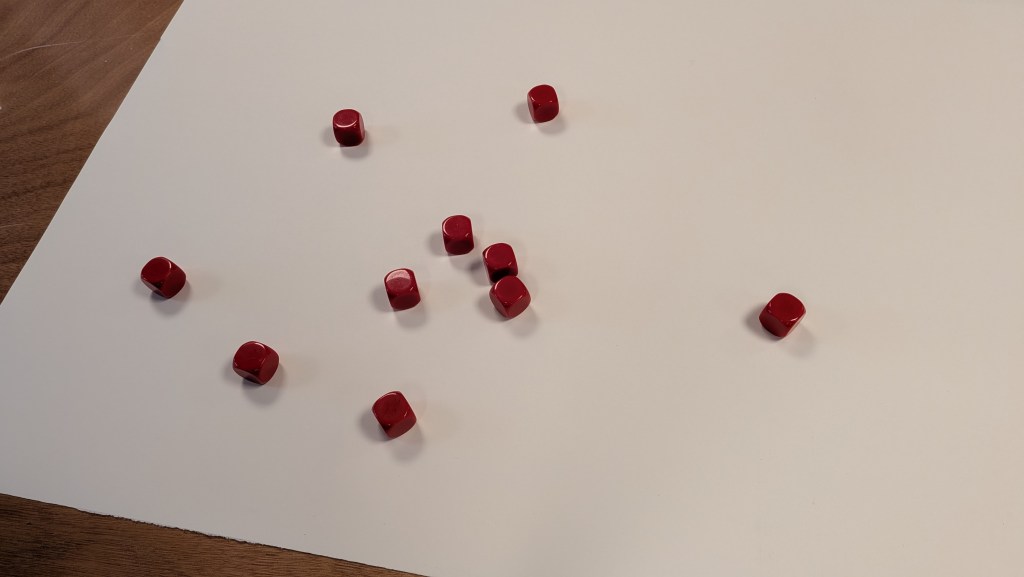
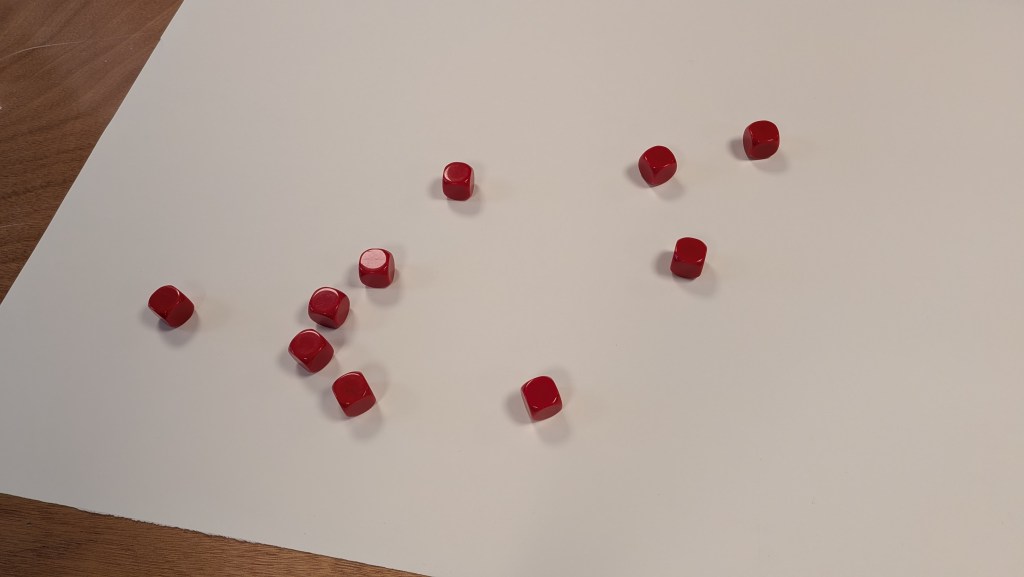
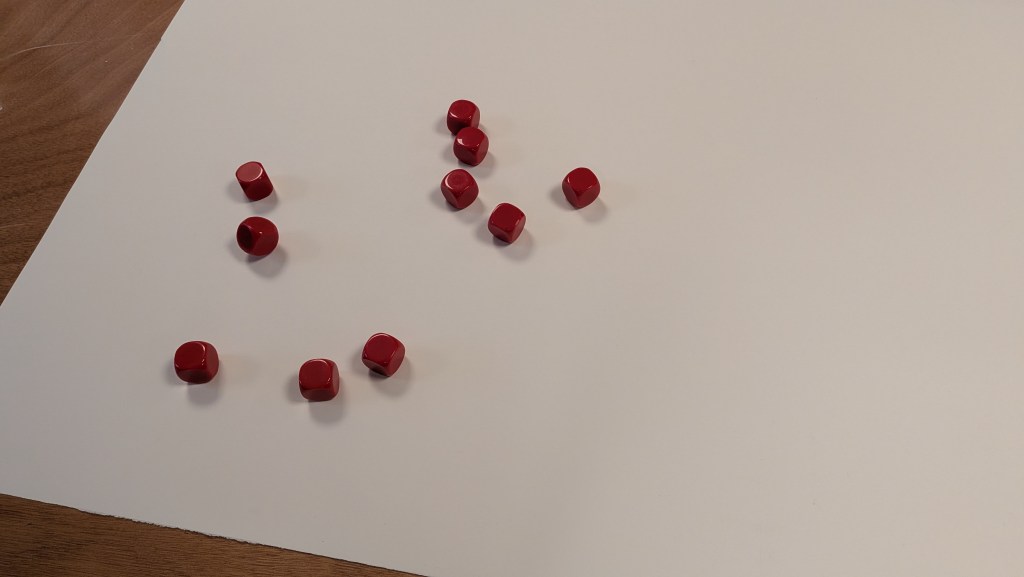
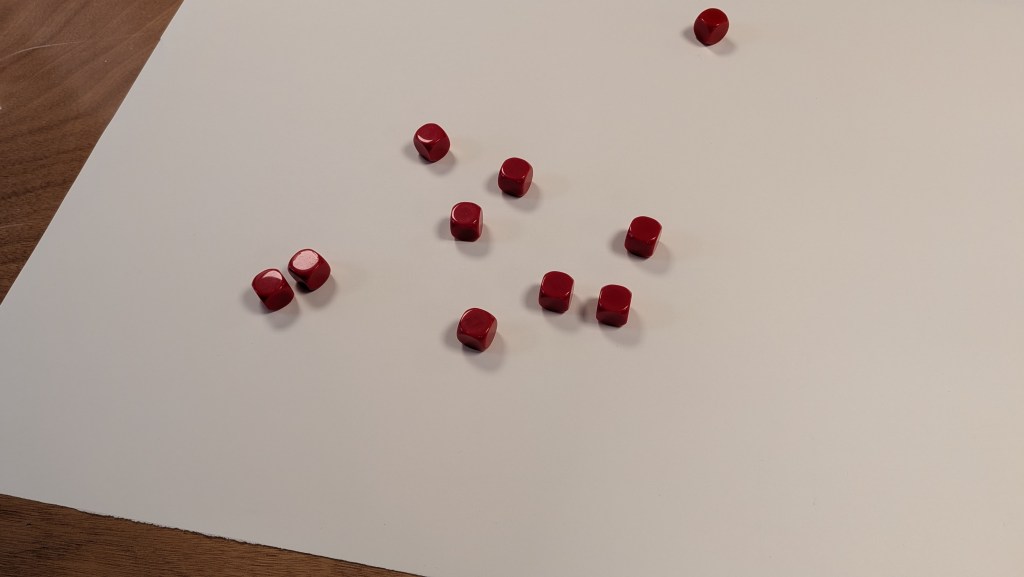
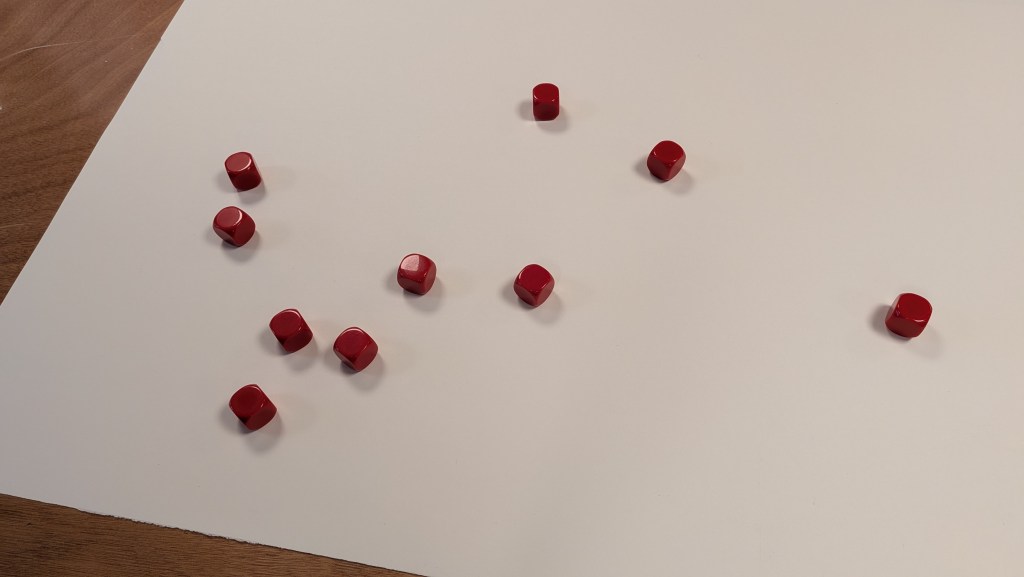
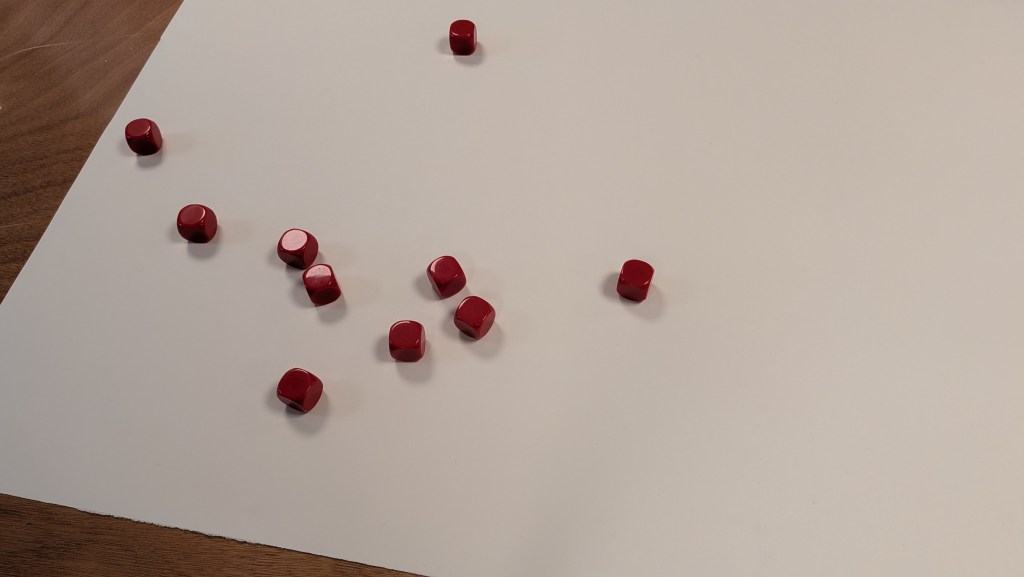
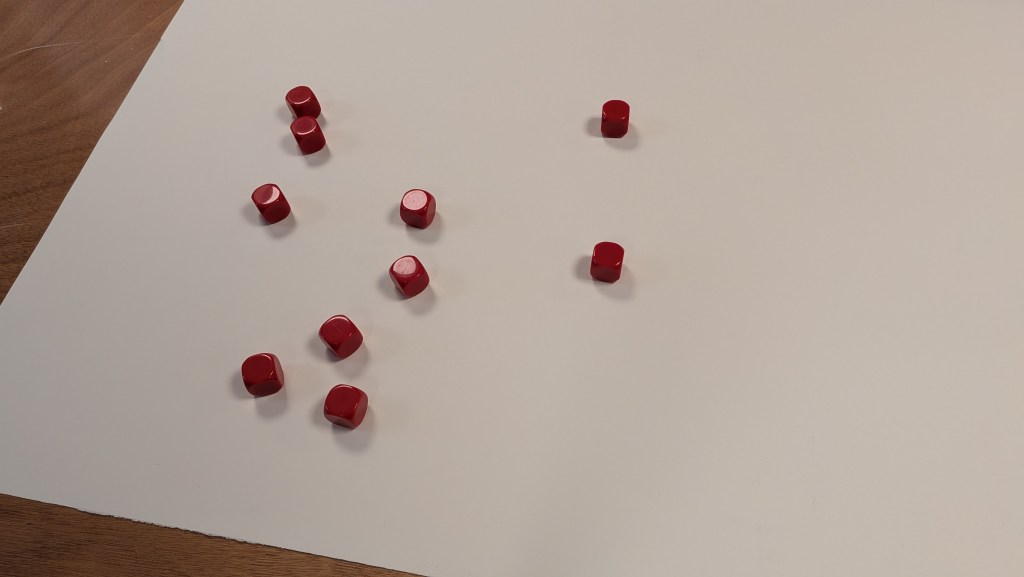
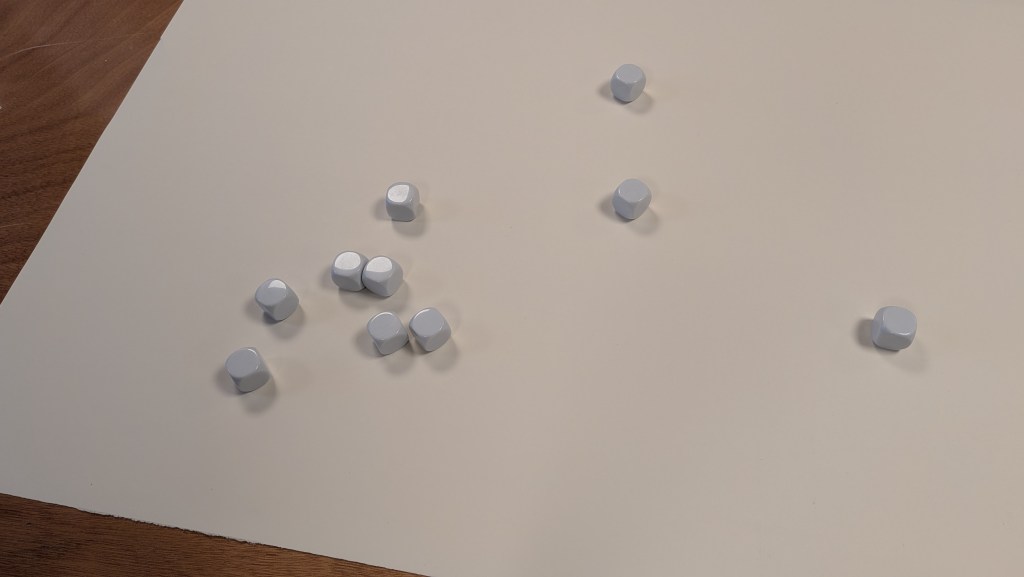
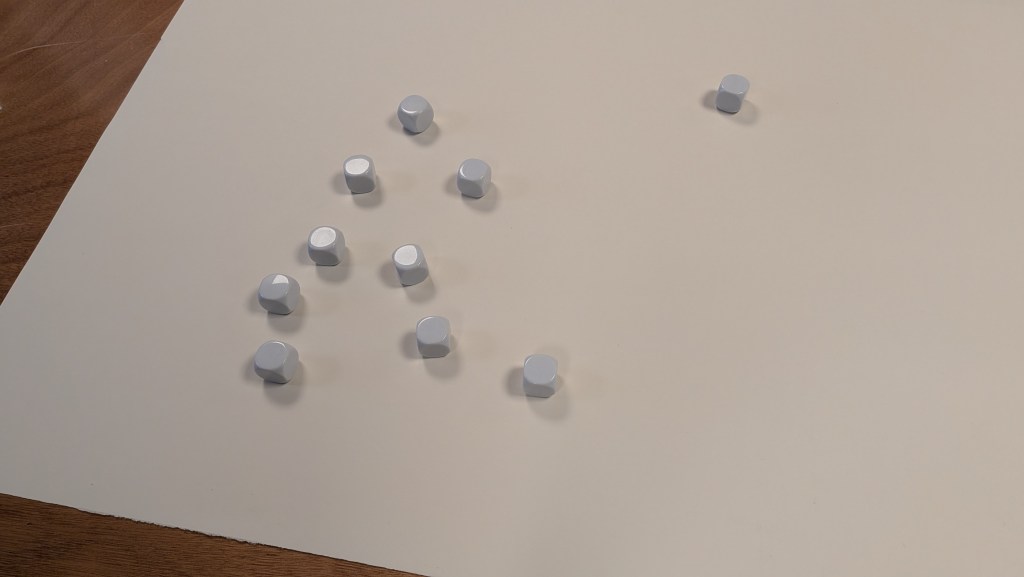
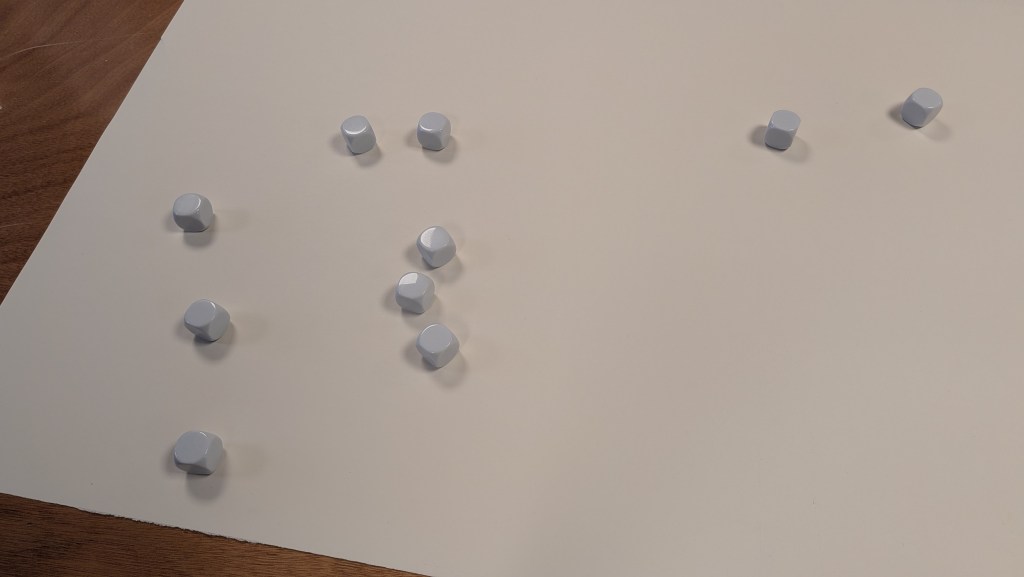
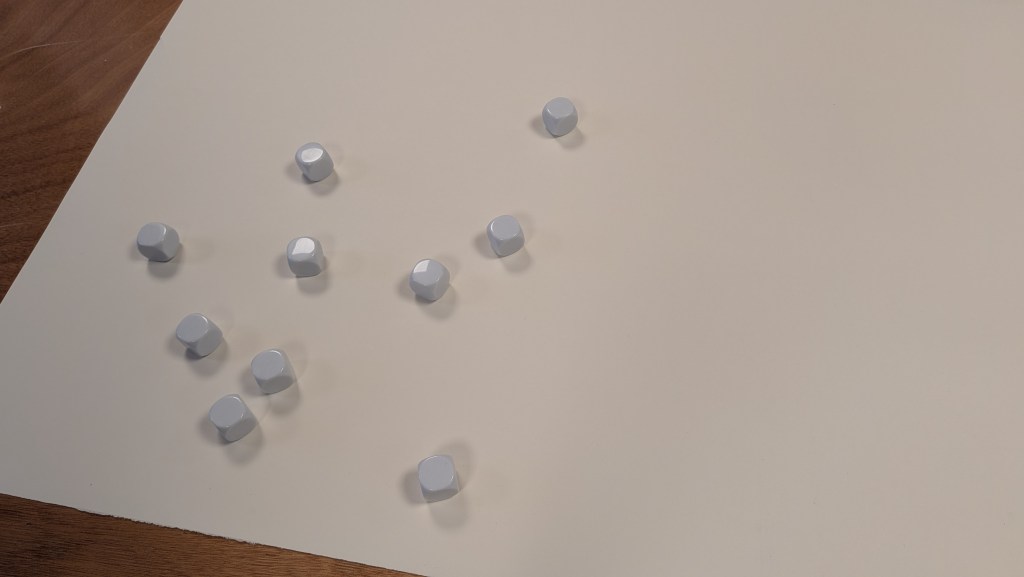
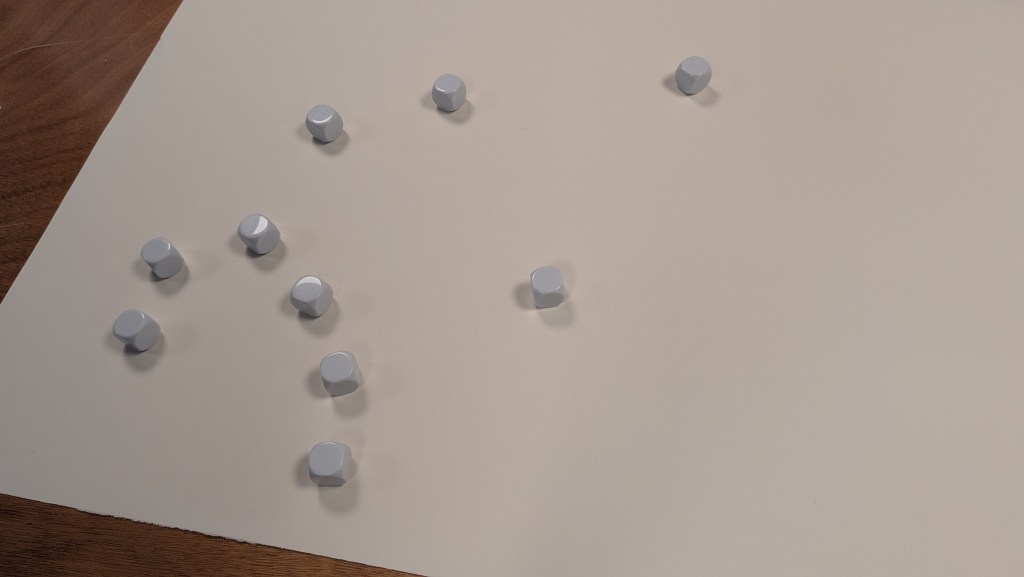
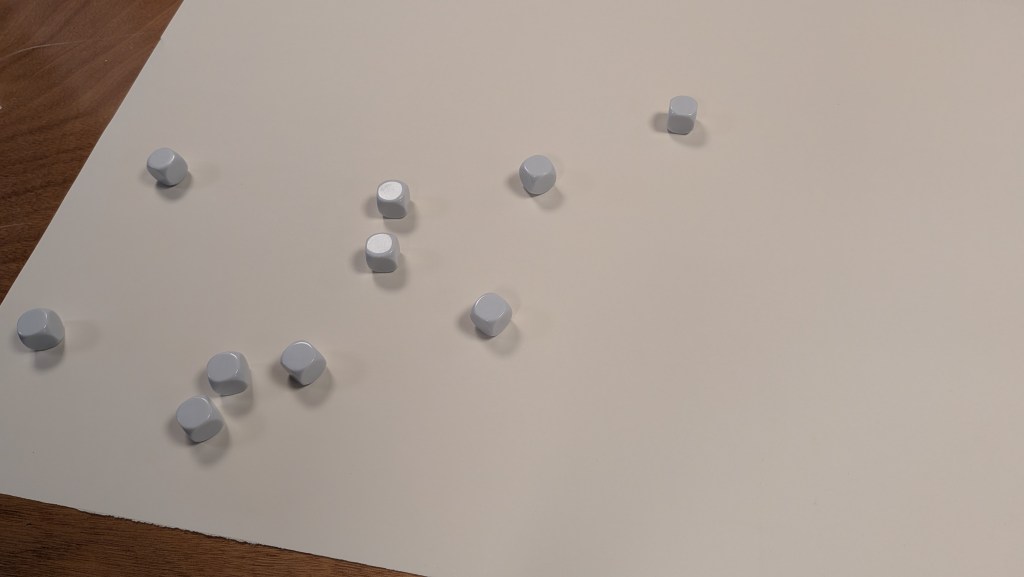
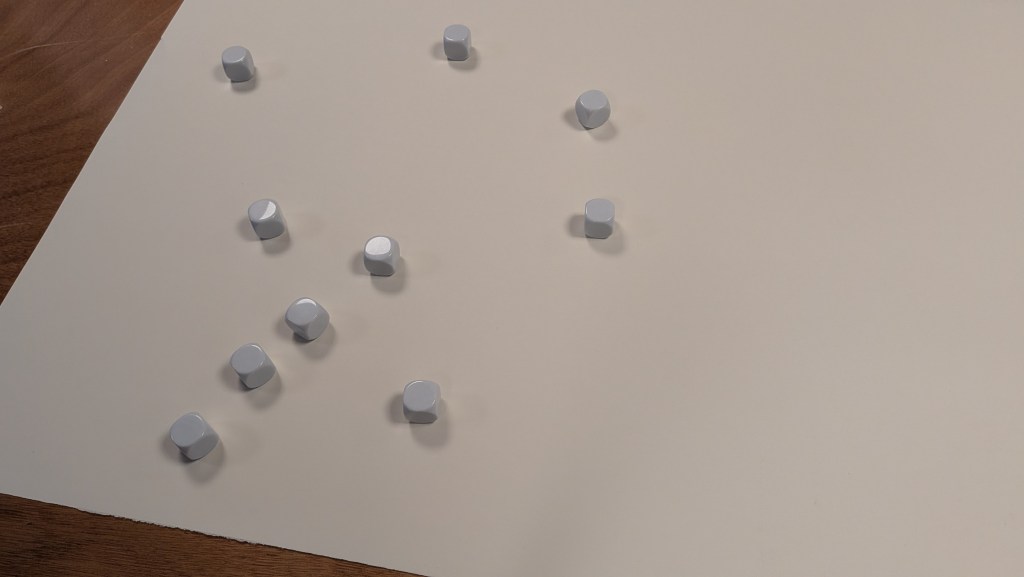

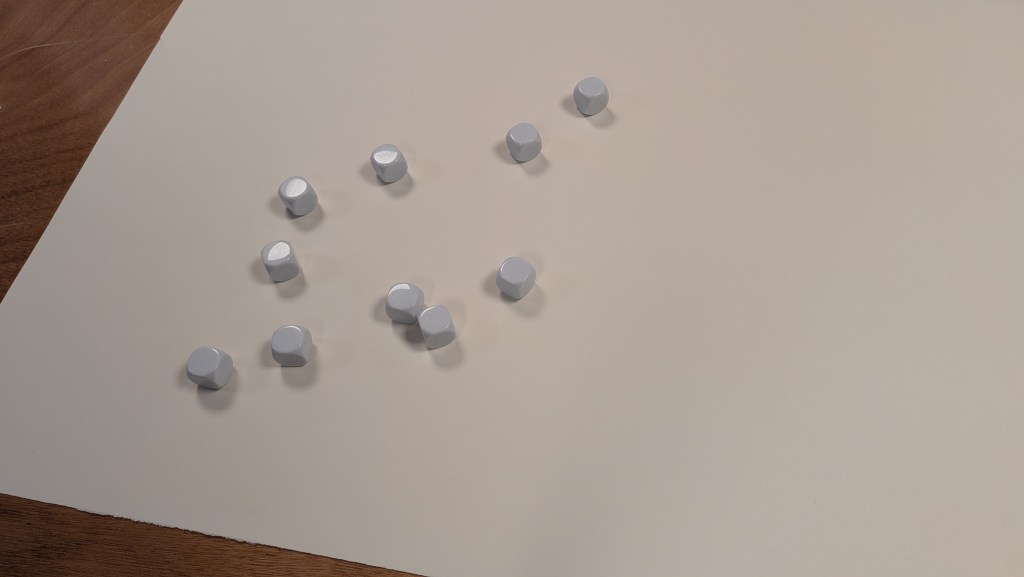
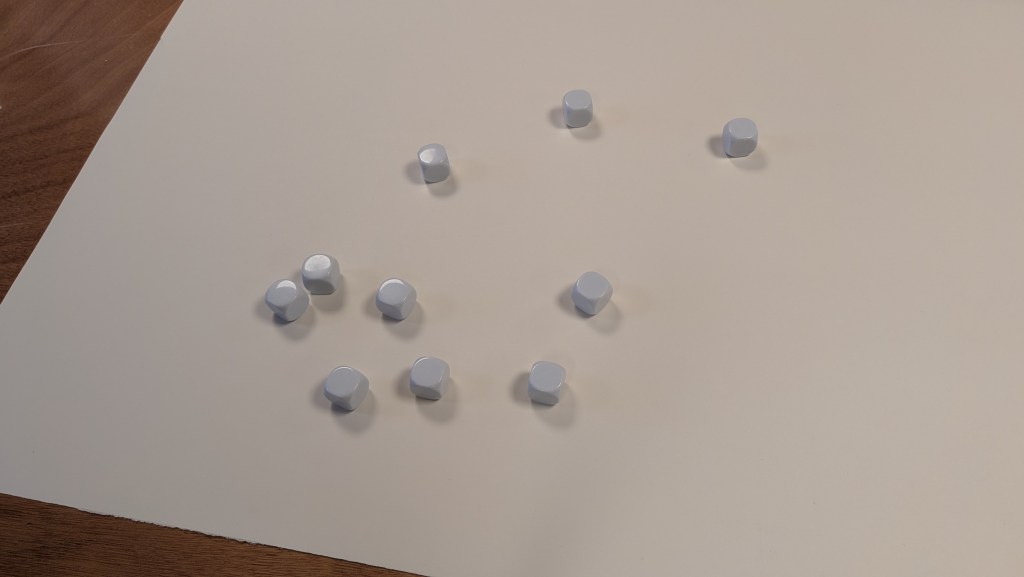
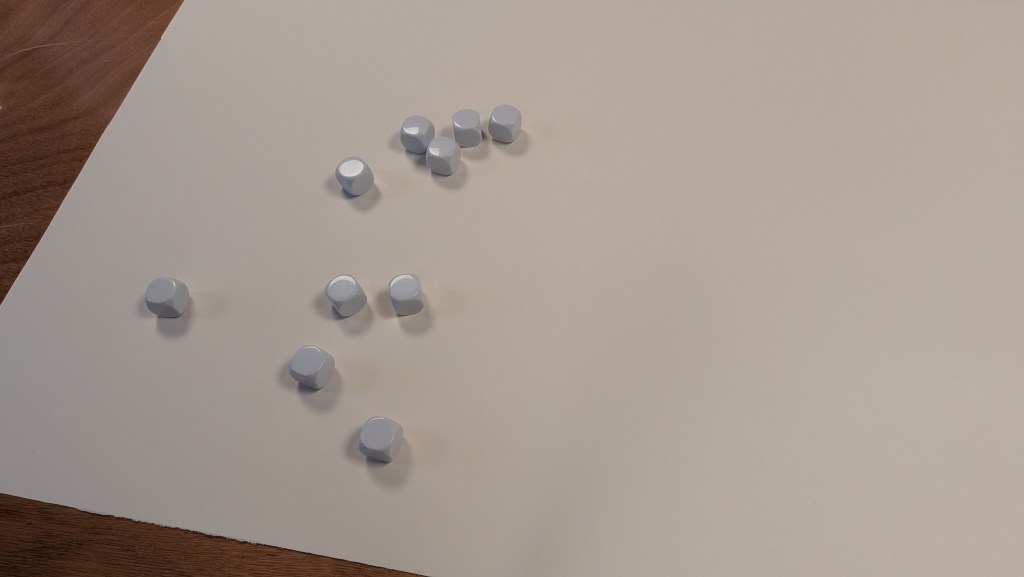
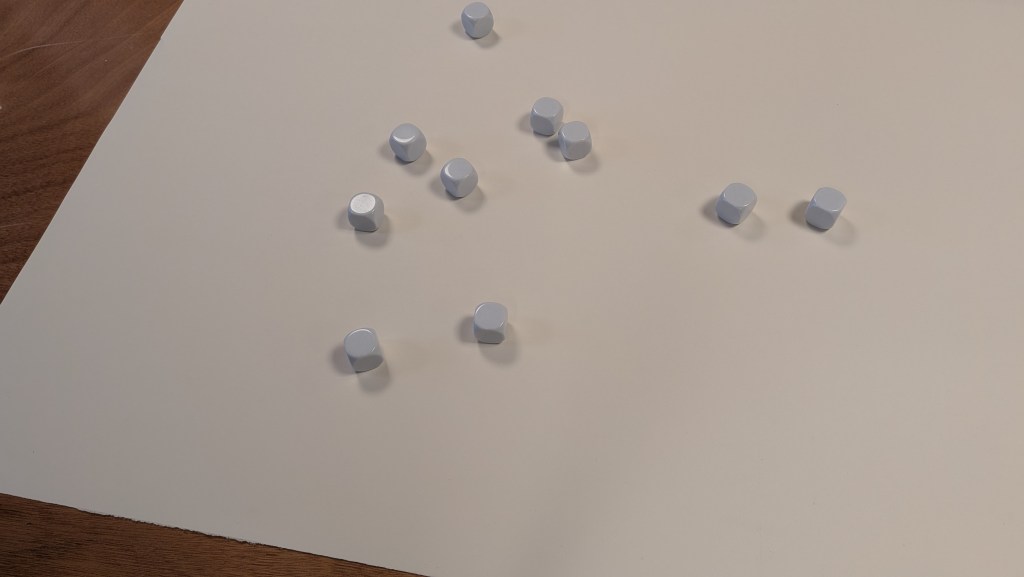
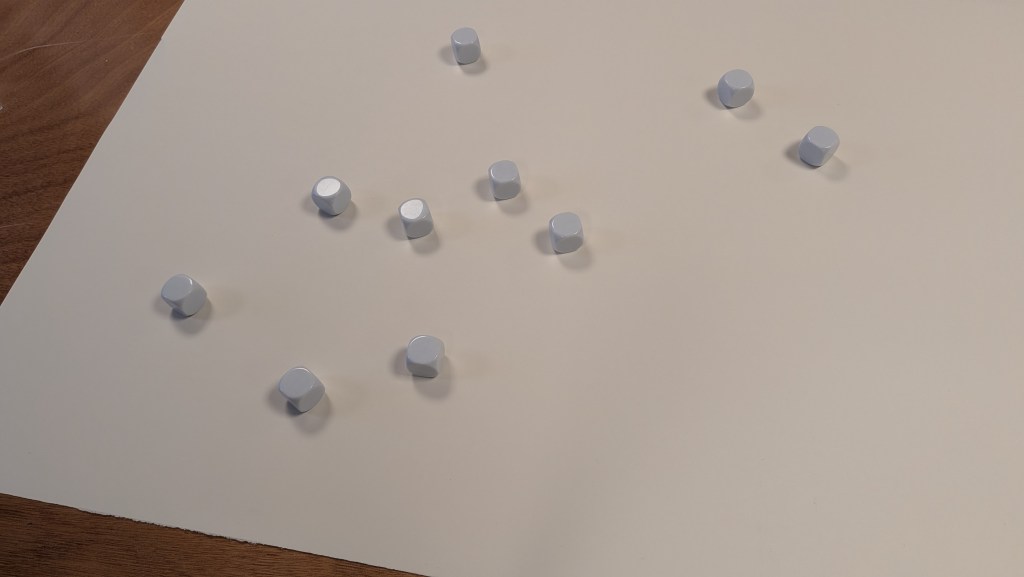
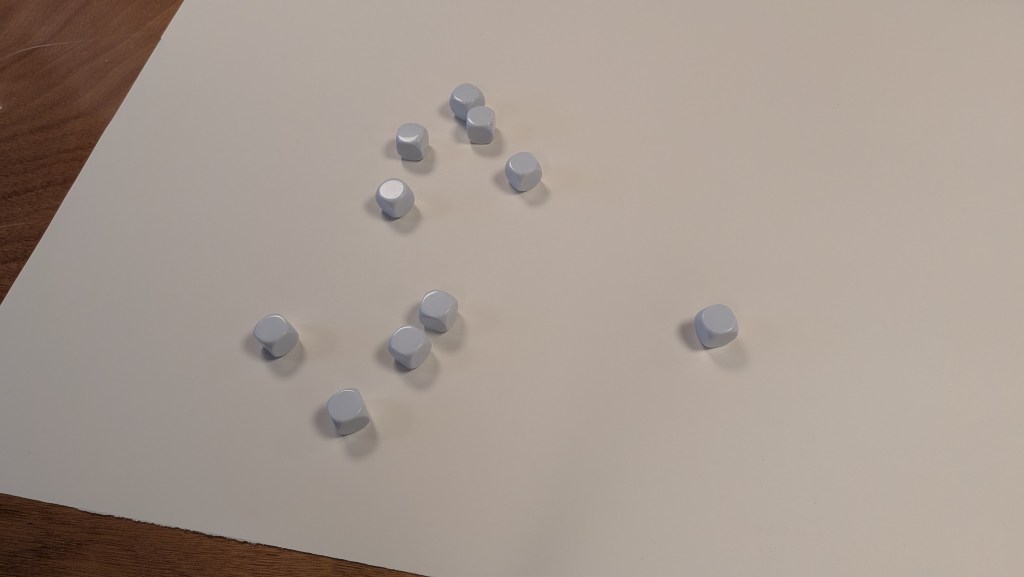
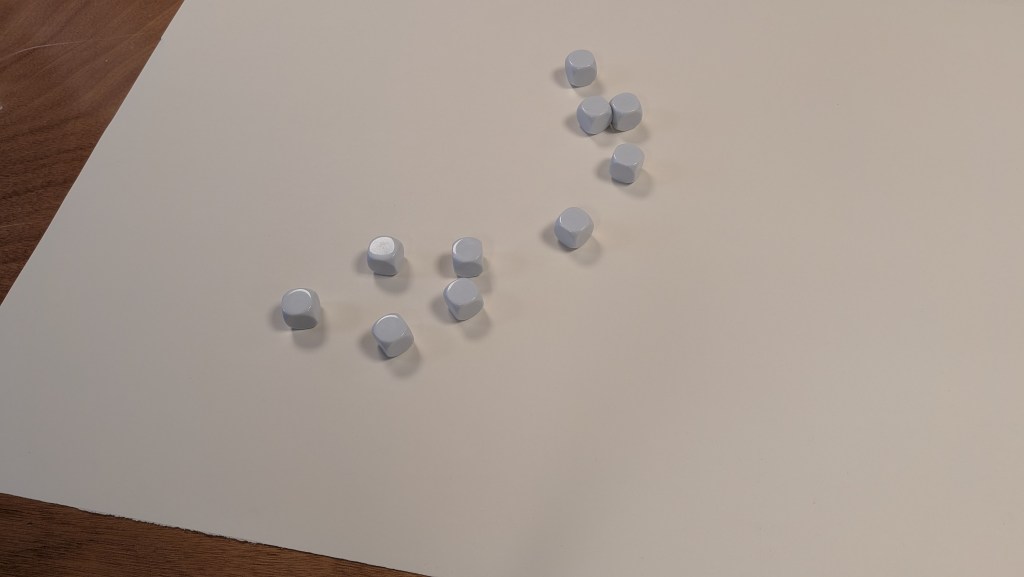
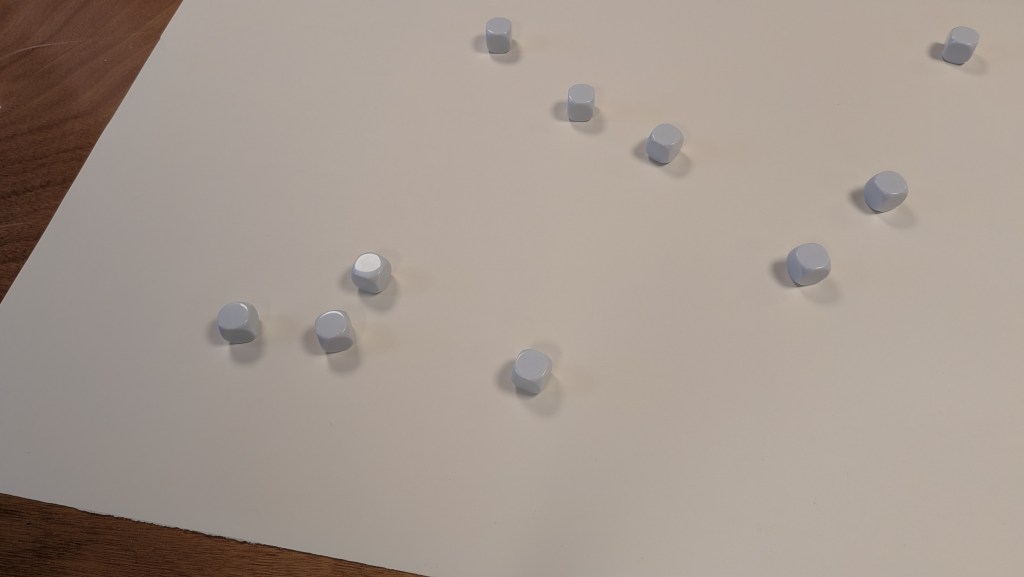
Untitled
2025-
Medium, Mixed media and Faceless Dice
Dimensions, Variable
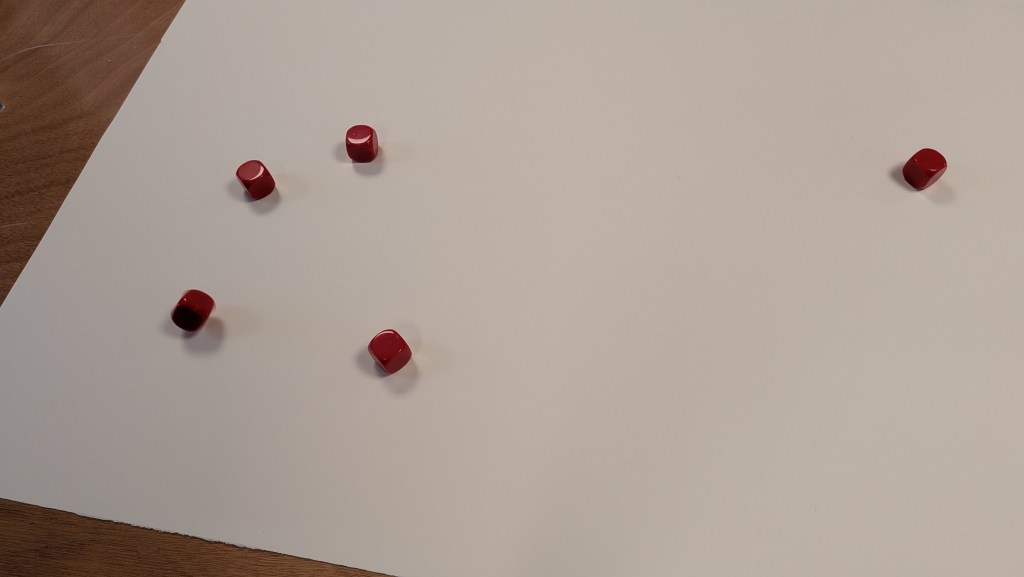
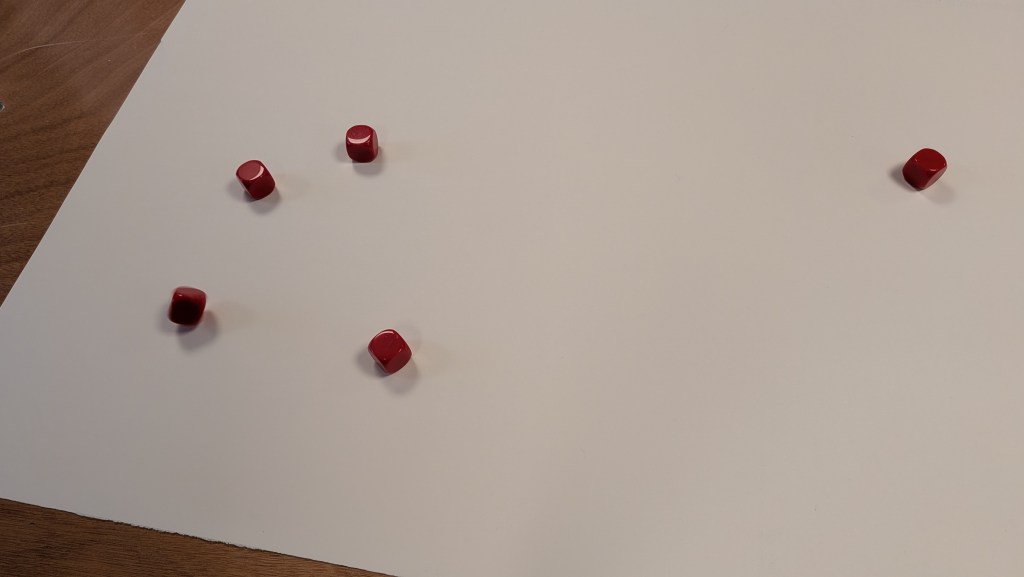
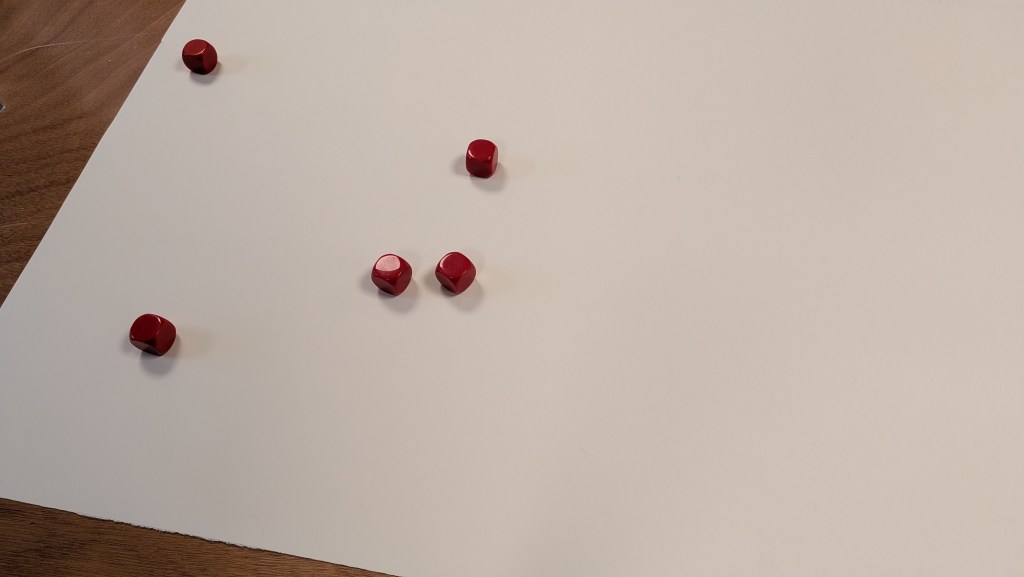
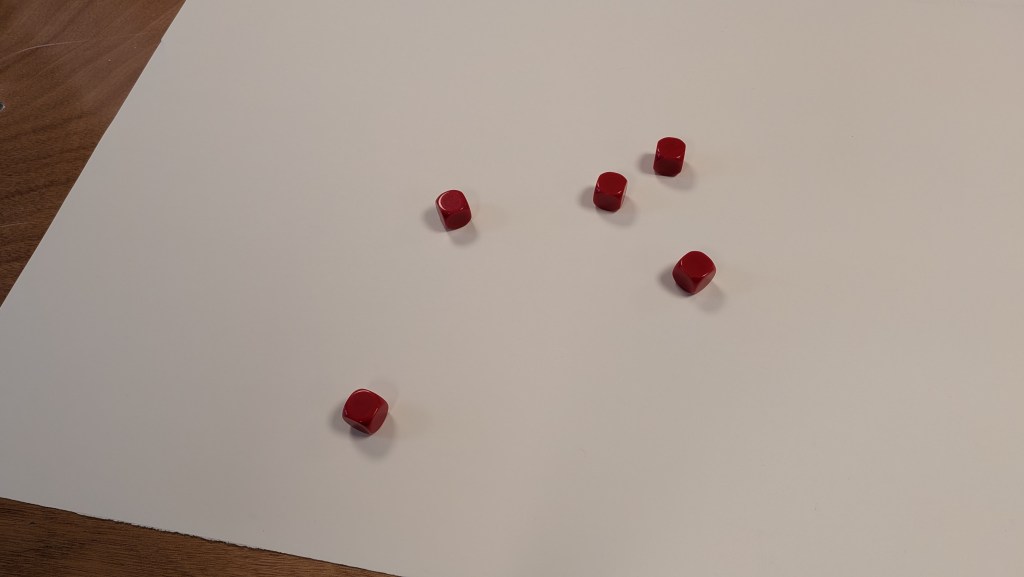
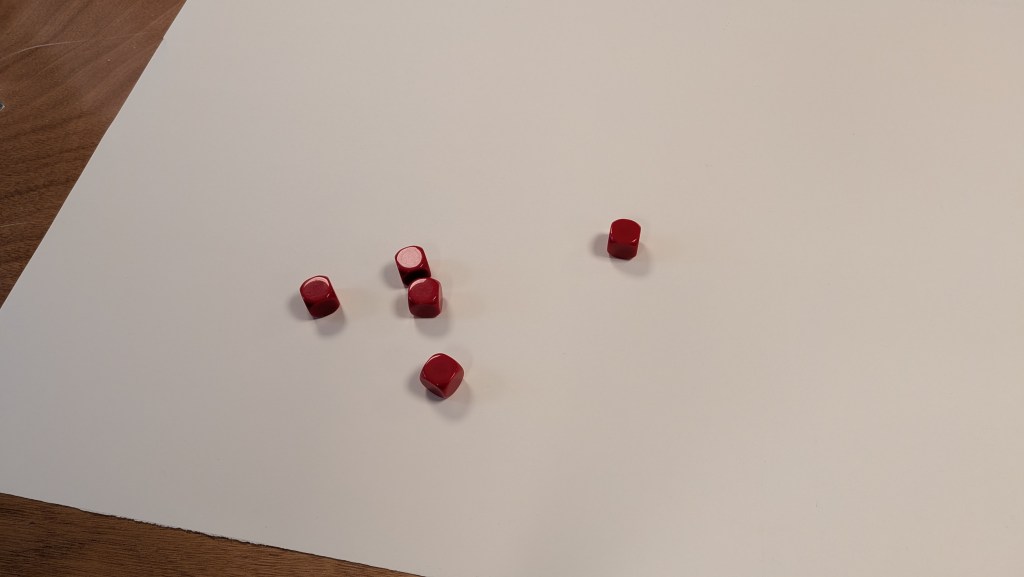
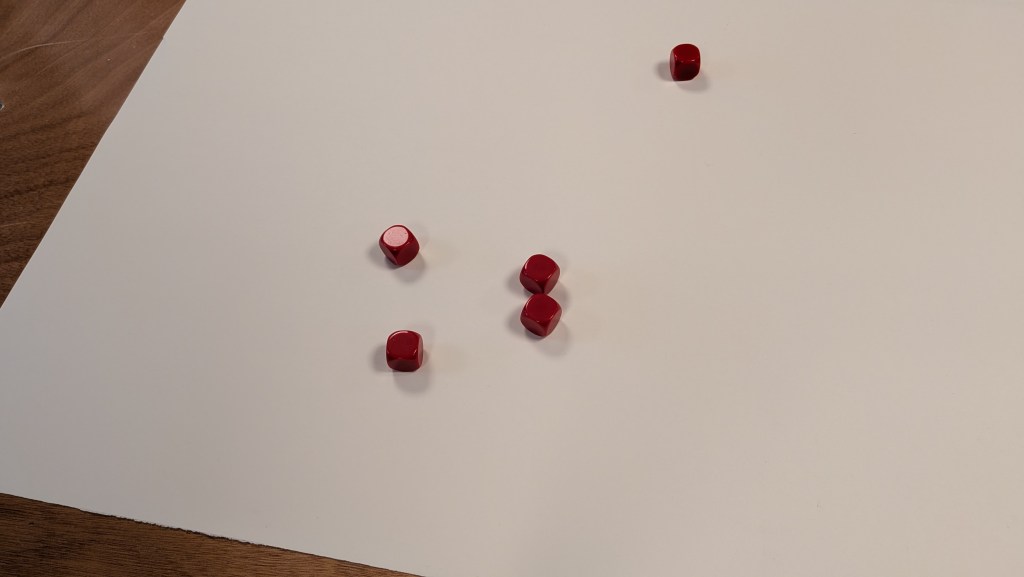
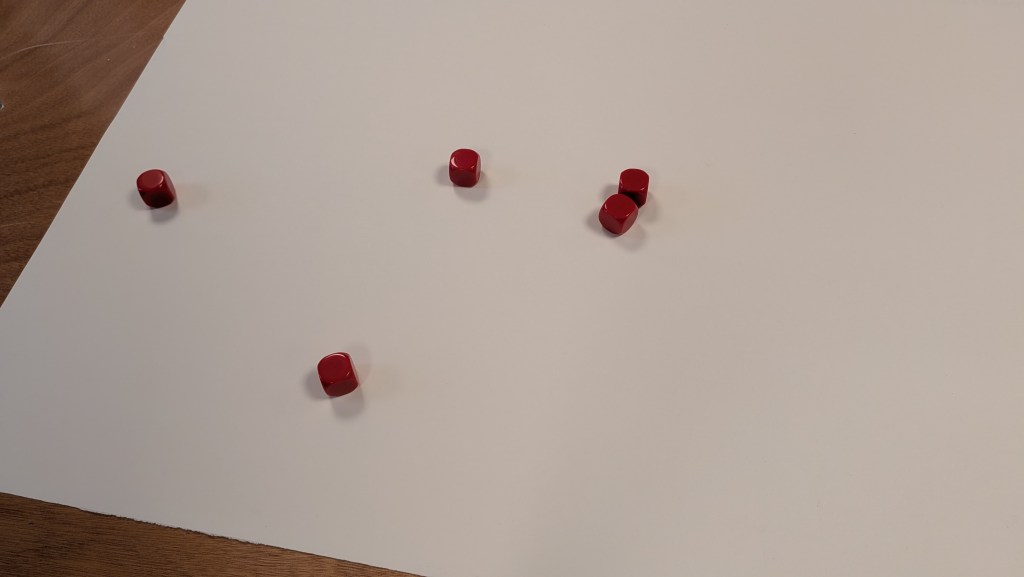
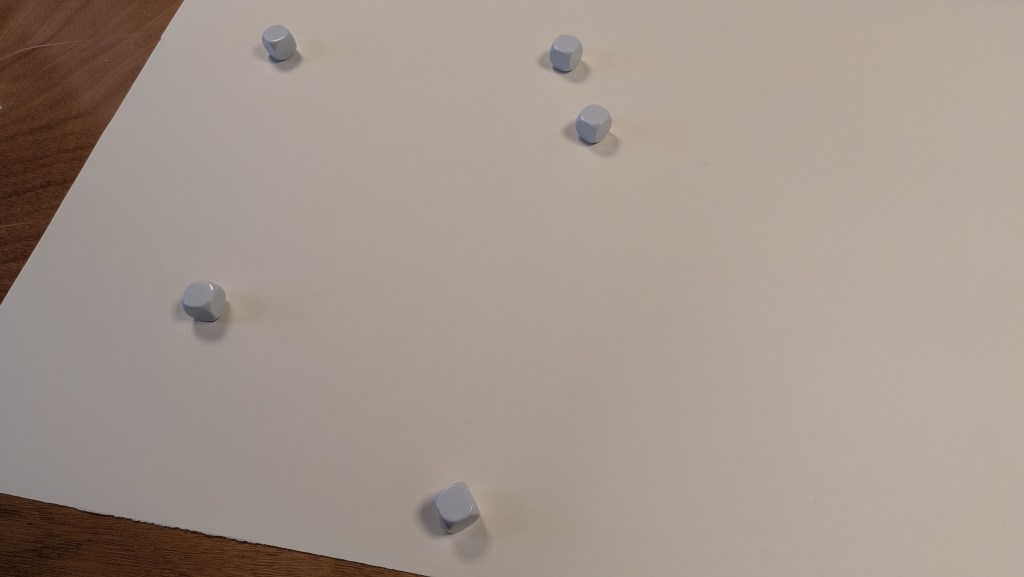
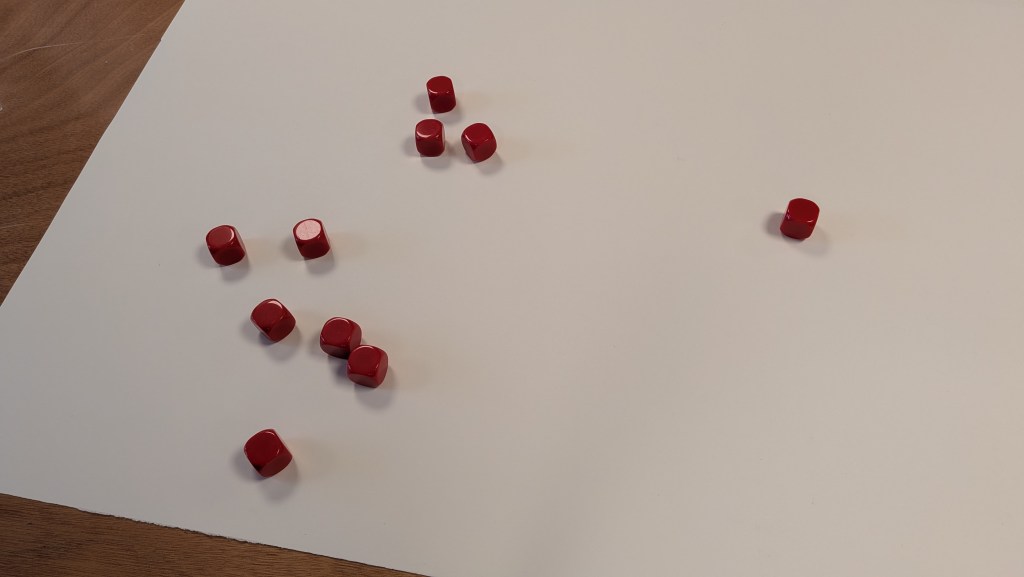
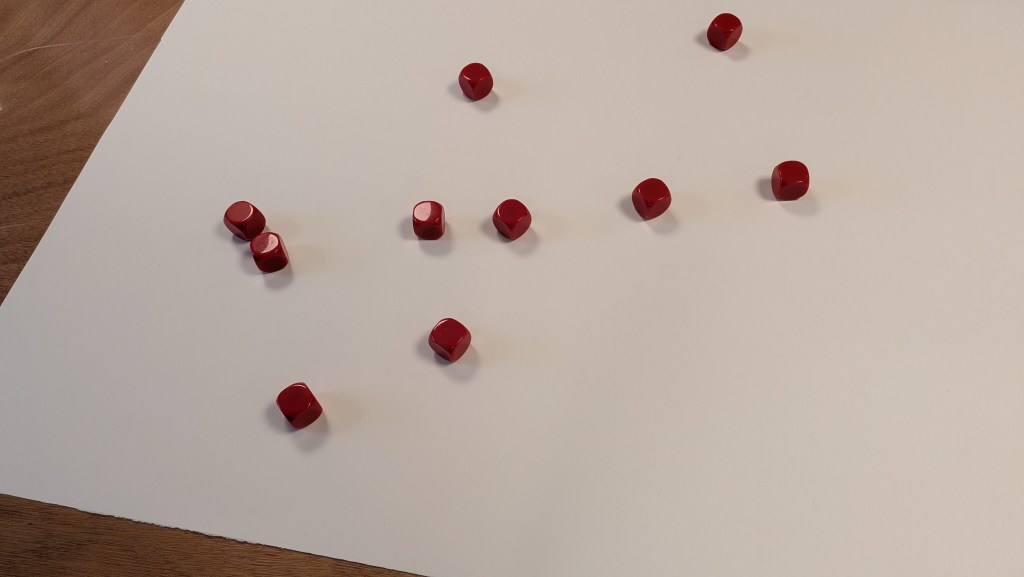
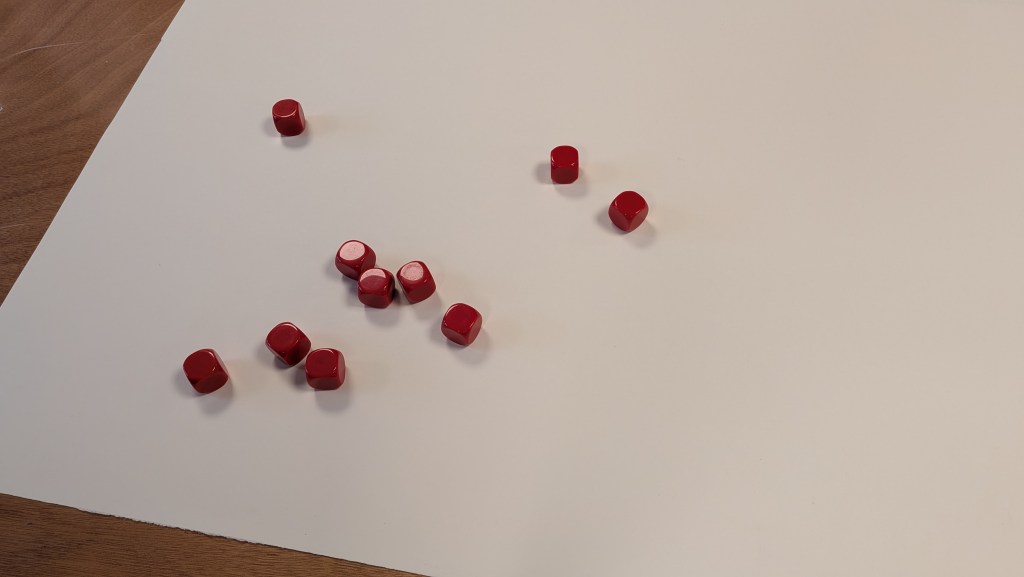
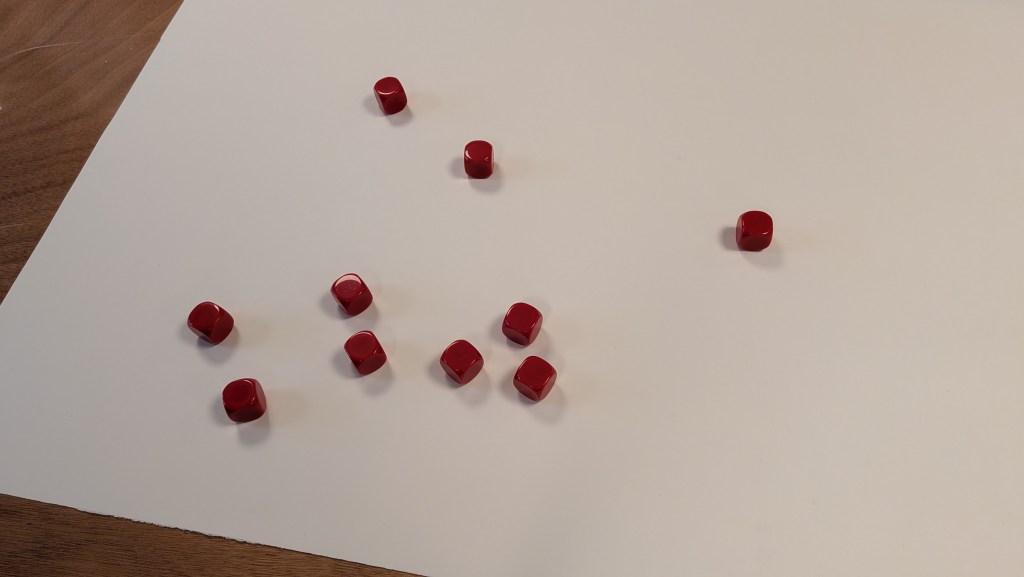
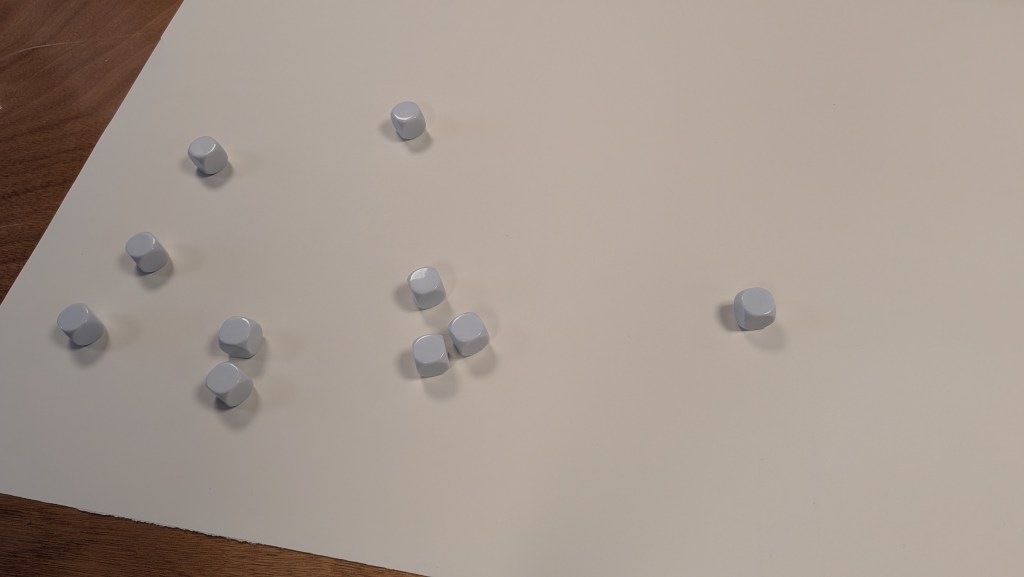
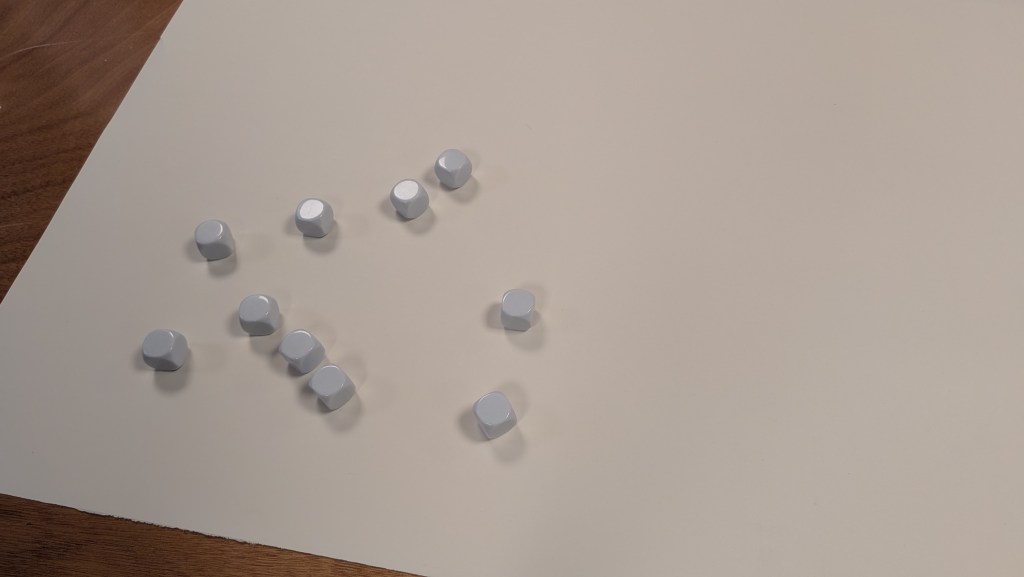
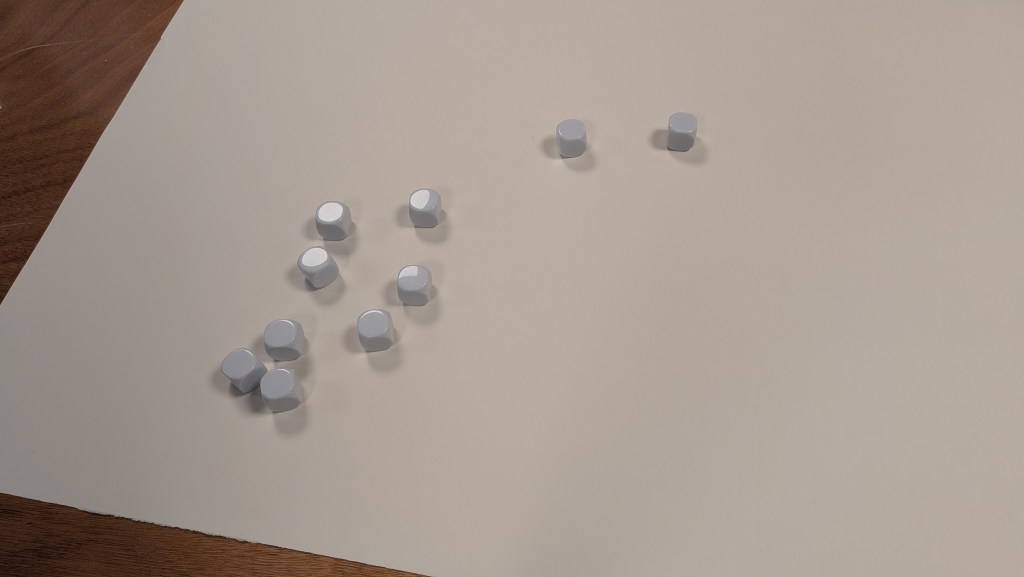
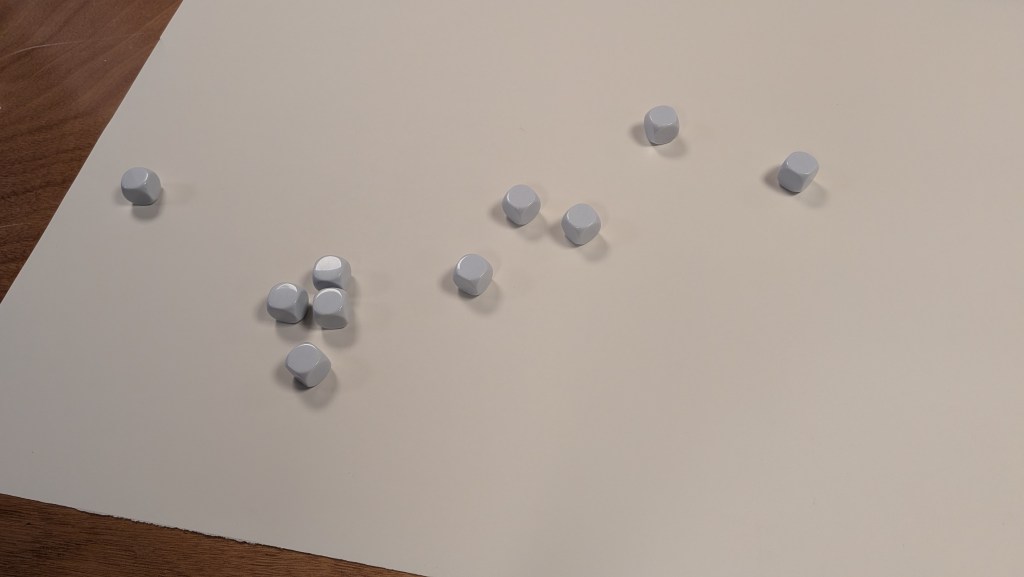
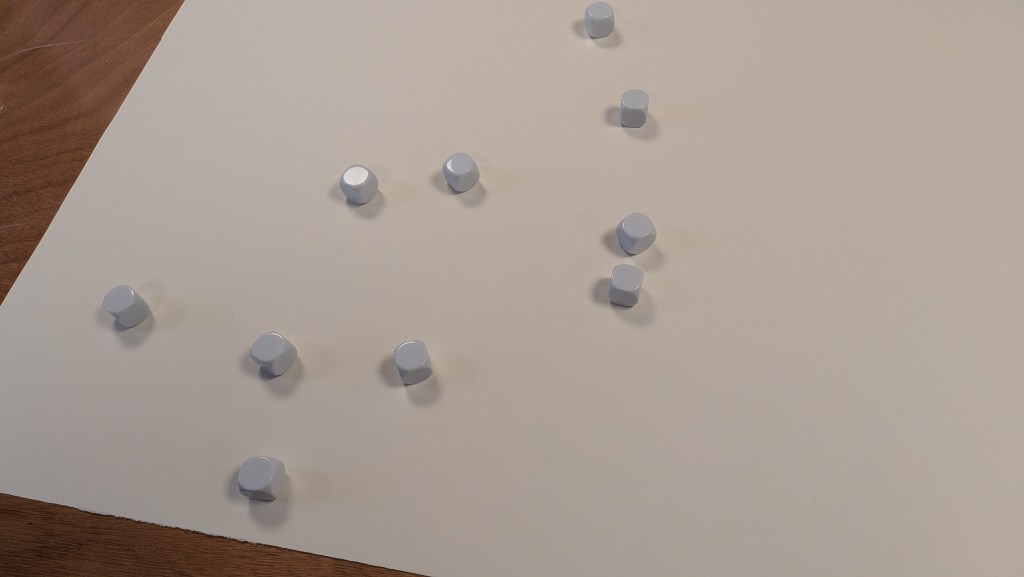
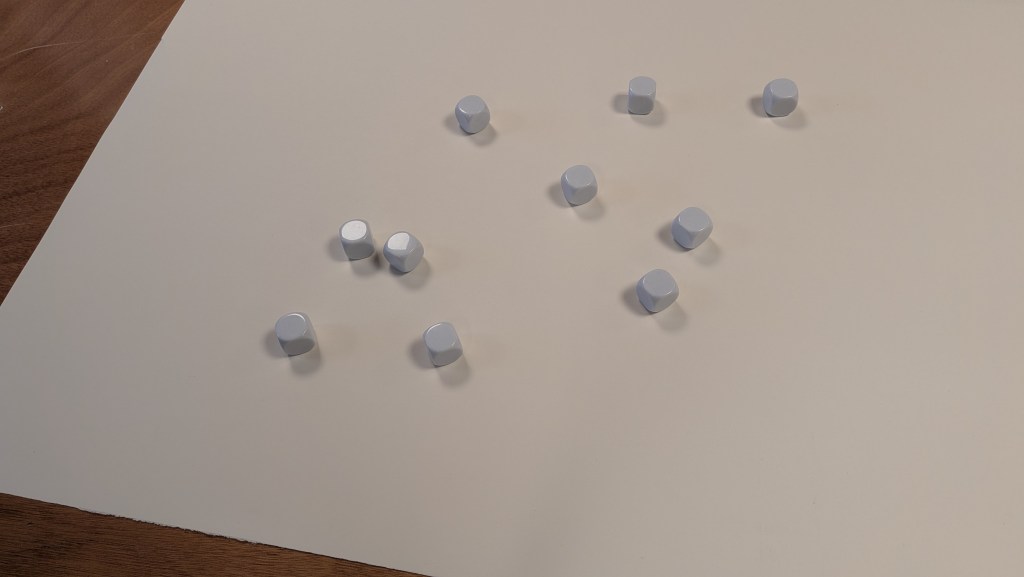
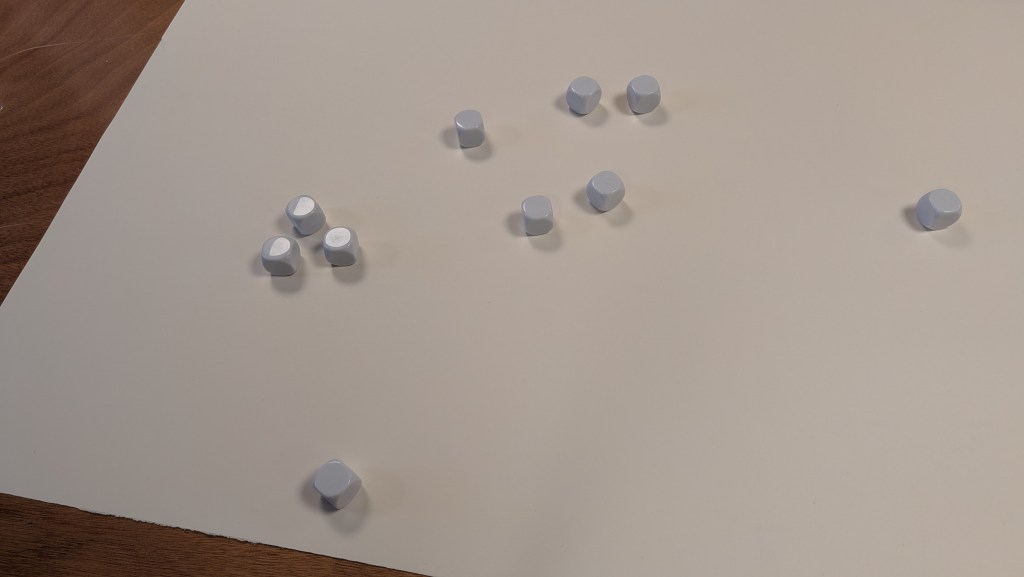
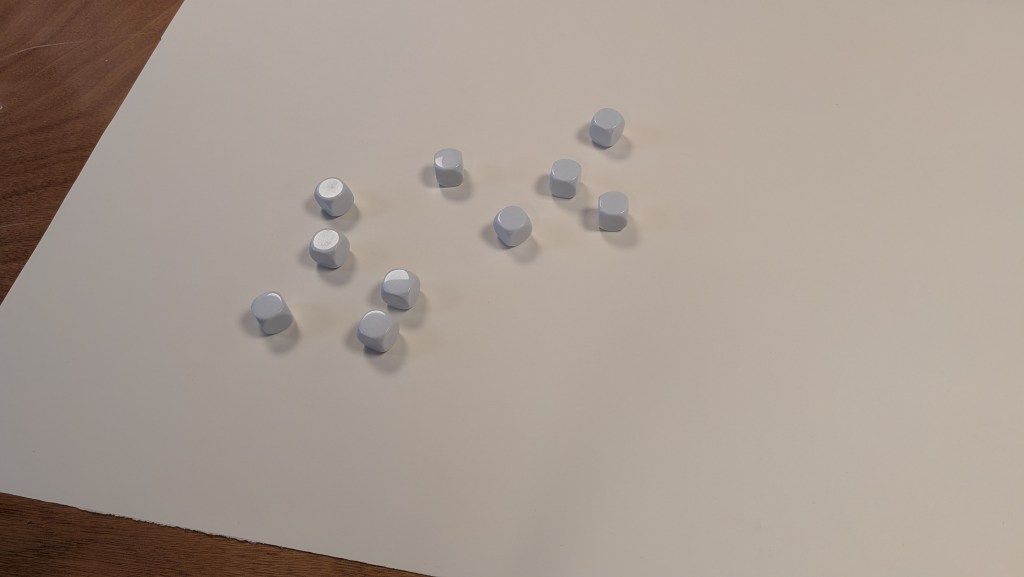
What does it mean to surrender to chance while still asserting control? This question shaped my performance, a durational work using red and white faceless dice, objects stripped of their numerical identity yet loaded with symbolic meaning. Over the course of the performance, I interacted with these dice in a series of improvised gestures, each documented through 98 photographs, creating a visual archive of unpredictability and intention.
Dice are traditionally instruments of randomness, carriers of probability and uncertainty. By removing their faces, I erased their functional identity, transforming them into mute objects, equal, anonymous, and resistant to categorisation. This act subverts the logic of gaming and chance, replacing numerical hierarchy with conceptual ambiguity. The dice become metaphors for emptiness, nothingness, and nowhere, without labels, objects without imposed systems.
The choice of red and white introduces a dialogue of contrasts visibility and neutrality, intensity and calm, assertion and surrender. Red evokes urgency and power, while white suggests openness, silence, and possibility. Together, they create a visual rhythm that oscillates between dominance and surrender.
The performance was documented through 98 images, not as mere records but as extensions of the work. Each photograph captures a moment of negotiation between body, object, and space a choreography of chance and control. The repetition of images mirrors the iterative nature of the performance, reinforcing themes of nothing in something and variation within sameness.
Conceptually by staging dice as art objects, the work questions systems of value what makes an object significant when stripped of its original function? The performance embraces play as a critical strategy, using humour and irony to destabilise expectations of order and predictability.
Faceless Dice is an inquiry into systems of meaning, randomness, and the human impulse to impose order. Through gesture, colour, and repetition, the work invites viewers to reflect on the fragile balance between freedom and structure.
All In 1, Multiplicity, Equality, and the Language of Numbers
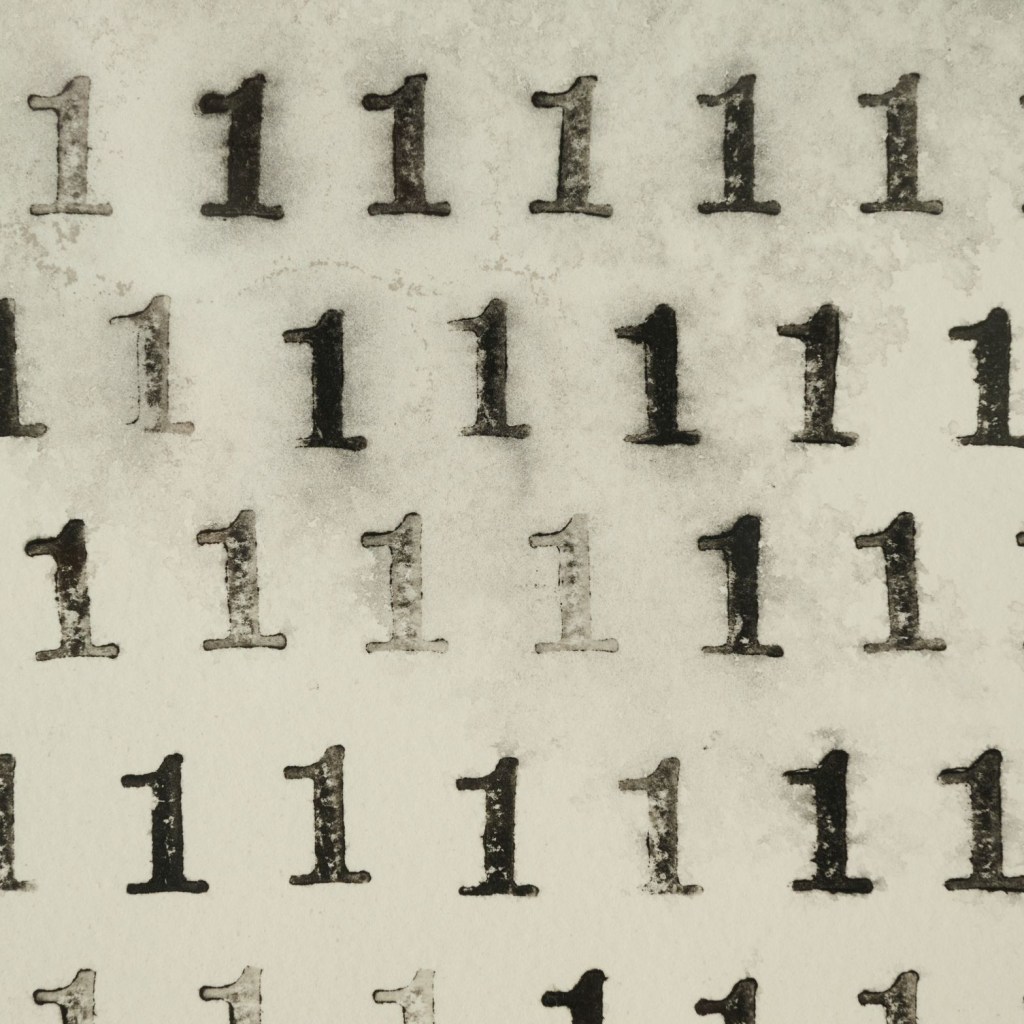
Title, All in 1
2025
Medium, Painting
Dimensions, 168 x 228 cm
The idea for All In 1 emerged during a quiet evening walk along the Aberystwyth promenade. After receiving my acceptance email for the Perspective(s) project, I began reflecting on the theme of Multiplicity. The rain-soaked path was marked with endless water stains similar yet distinct. These impressions sparked a thought: how can repetition embody individuality while preserving equality? That question became the foundation of this work.
The choice of Ivory Black pigment was deliberate. Historically associated with depth and permanence, this pigment carries a sense of gravity and timelessness. Its rich, matte quality resists distraction, allowing the viewer to focus on form and concept rather than colour. Black also functions as a universal equaliser, removing chromatic hierarchy and emphasising the purity of the repeated figure. Each mark, though visually unique in density and texture, shares the same tonal identity, reinforcing the idea of equality within differenceIn. In All In 1, this concept becomes visual: repeated figures of “1” vary in pigment density and texture, yet their mathematical value remains constant. This creates a metaphor for human diversity unique expressions, shared equality while blurring systemic categorisations and celebrating unity without erasure.
At the heart of All In 1 lies the mathematical value 1, a symbol of singularity and wholeness. Repeating “1” across the surface creates a paradox: multiplicity built from unity. Each figure represents an individual, distinct in its material expression yet equal in value. This repetition challenges systemic categorisation by presenting a visual language where sameness and difference coexist harmoniously. The work asks: Can individuality thrive without hierarchy? Can equality exist without erasure?
Through its minimalist aesthetic, All In 1 blurs the facade of imposed divisions, EVERYONE reduced to a shared denominator without losing uniqueness. It is a quiet meditation on belonging, equality, and the beauty of multiplicity, inviting viewers to consider their own place within collective identity.
Untitled, Site-Responsive Performance at Ruthin International Arts Festival
Untitled
2024
Medium, Performance art
Duration, Improvised
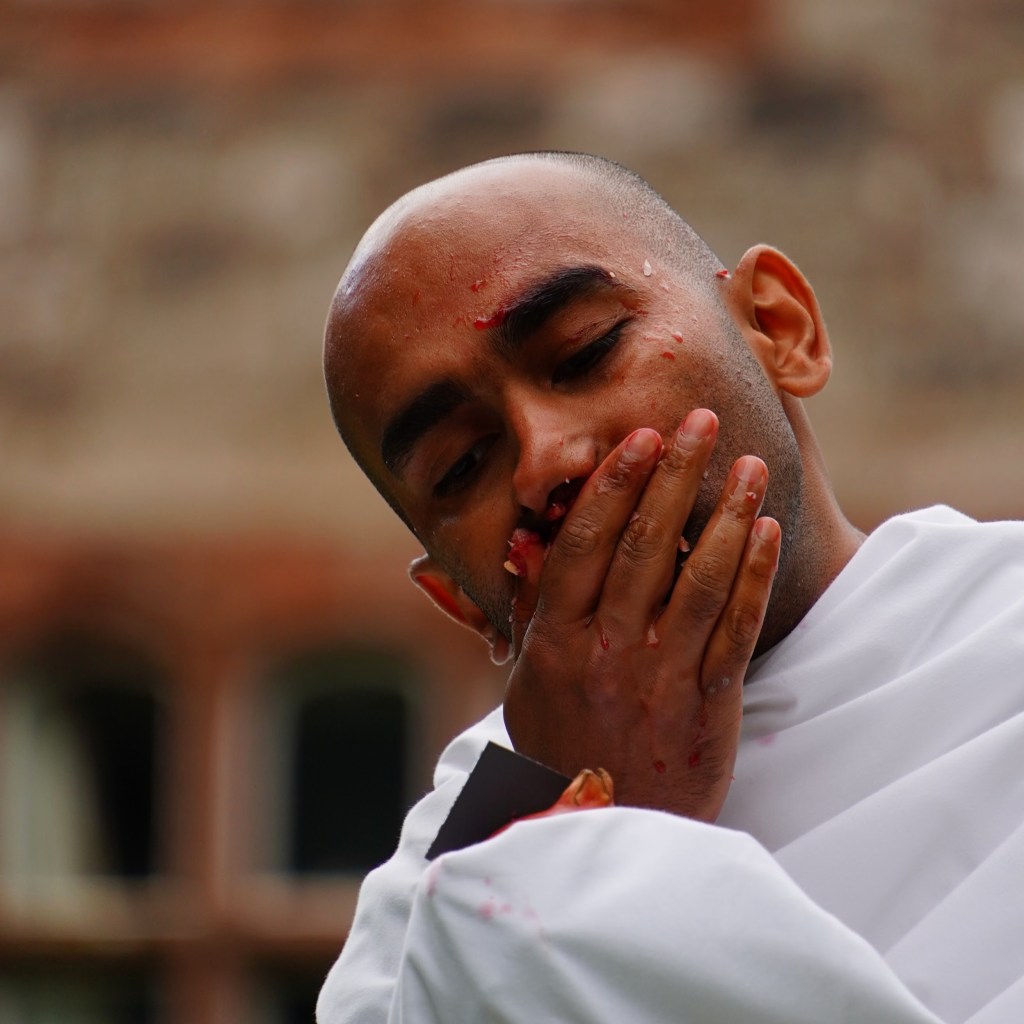
In 2024, I was commissioned to create a site-responsive performance for the inaugural Ruthin International Arts Festival (RIAF). The work was deeply influenced by the historic location of Ruthin (Welsh: Rhuthun), a town whose name originates from rhudd (red) and din(fort) a reference to the red sandstone bedrock from which Ruthin Castle was built between 1277 and 1284.
The performance interrogates the territorial nature of humans and non-human animals, drawing parallels between instinctive marking behaviours across species. Territoriality is not only physical but psychological, a way of asserting presence and belonging. By engaging with this primal act, the work questions how power, identity, and space intersect in both historical and contemporary contexts.
Positioned parallel to Ruthin Castle, I began the festival by marking the site in red a symbolic gesture of territorial claim and embodied dialogue with the architecture. This act of “urinating in red” was not a provocation but a conceptual intervention, referencing both animalistic marking and the human impulse to inscribe meaning onto landscapes. The colour red echoed the sandstone of the castle, collapsing the boundary between body and structure, past and present. Ruthin’s layered history, its fortifications, its etymology, its cultural significance provided a fertile ground for exploring themes of dominance, vulnerability, and belonging. The performance sought to activate these histories, transforming them into a living conversation about territory and identity.
Somatic Ancestors, A Contemporary Ritual of Memory and Movement
Title, Somatic Ancestors
2024
Medium, Performance art
Duration, 3 hours
Somatic Ancestors is a durational performance divided into three 45-minute segments, punctuated by two 15-minute breaks. This work emerges from my lived experience as a generational migrant navigating the unknown and invisible unrecorded ancestry that shapes identity yet resists documentation.
The performance invites the presence of ancestral memory through the body, realized via a contemporary ritual. It asks: How do we summon what is absent? How do we embody histories that have been erased or remain untraceable? By merging ancient ritualistic gestures with modern technologies, the work becomes a bridge between past and future, a dialogue across time.
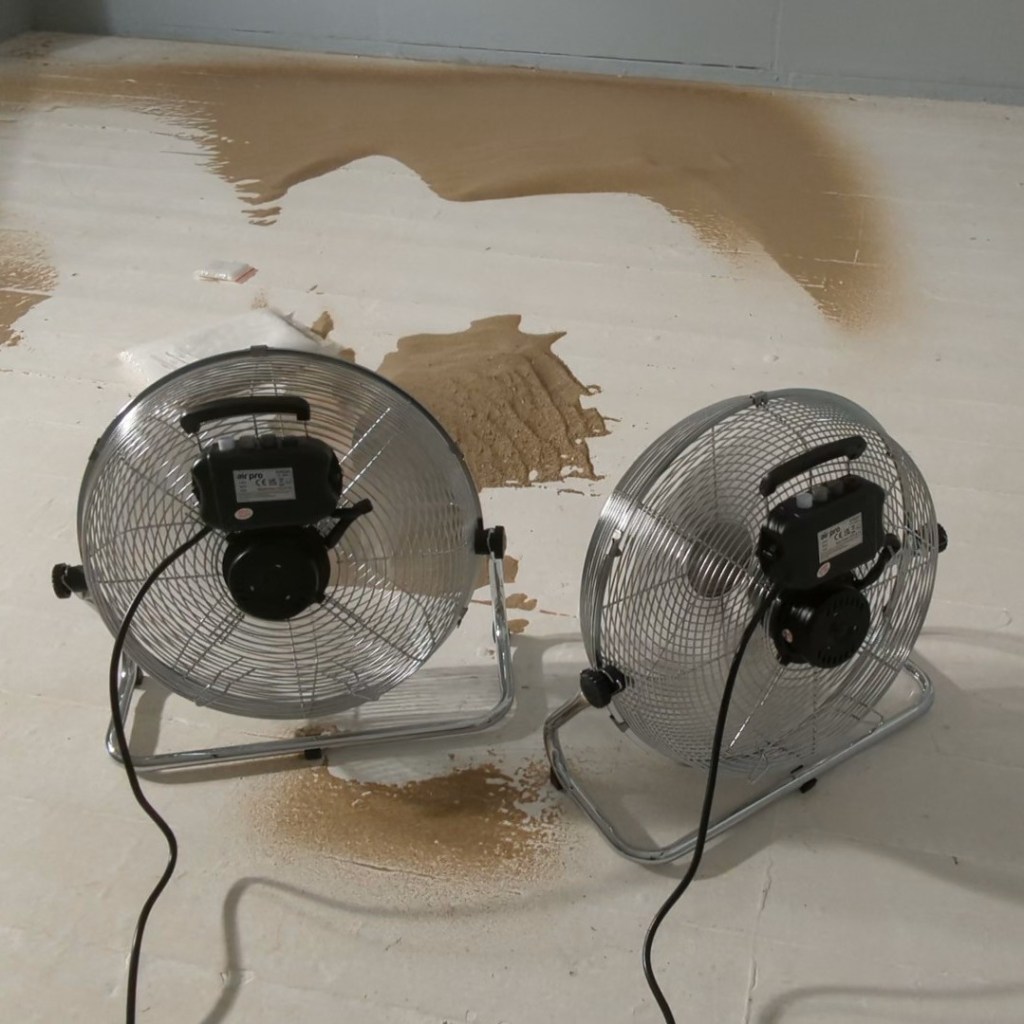
Wind power, generated by electricity, functions as an invisible spellcasting force, animating sand particles across the performance space. This interplay of air and earth evokes elemental forces, while the sand itself carries profound conceptual weight. Sand is not only a metaphor for time and erosion but also a literal component of memory used in electronic devices as a silicon-based material for data storage. In this way, sand becomes a dual signifier: ancestral memory and technological memory, both fragile yet enduring. Rituals have historically served as acts of remembrance, transformation, and connection. Somatic Ancestors reimagines ritual for the contemporary moment, using movement, breath, and elemental interaction to create a space where the body becomes an archive a vessel for histories that cannot be written but can be felt.
Audiences witness a choreography of slowness and repetition, where gestures respond to shifting sand and currents of wind. The performance unfolds as a meditation on presence and absence, permanence and impermanence, inviting viewers to reflect on their own ancestral ties and the invisible forces shaping identity.
My Voice Is Not Working, Exploring Vulnerability in Institutional Spaces
Title, My Voice Is Not Working
2024
Medium, Film
Duration, On a continuous loop, (There are subtitles in Welsh and English)
When developing this project, I drew inspiration from a range of contemporary and historical sources. Visually, Vicky Smith’s experimental film Shedding influenced my approach to movement and materiality, while Anna Mendieta’s practice provided a conceptual framework for thinking about embodied presence and site-specificity. These references shaped my understanding of how art can operate as both a physical and emotional experience. My process was rooted in practice-based research, thinking through making, testing, and refining ideas until they found their form.
The most profound inspiration, however, came from my own lived experience. During a collaborative visit to the British Museum, I was invited on a private tour with a curator. Standing alone in a room surrounded by sacred and culturally significant objects, I began to shiver and cry. That moment of vulnerability within an intimate setting was a powerful reminder of the complex dynamics between minoritised bodies and majority spaces. It reaffirmed why I am committed to exploring identity, power, and spatial politics through art.
This experience raised important questions: How do institutional spaces shape our sense of belonging? What does it mean to encounter objects that carry histories of displacement and colonialism? These questions became the foundation of my project. To find the right way to present my work, I undertook a rigorous process of experimentation, testing, and refining my curatorial methodology. I explored somatic approaches, immersive installation strategies, and participatory techniques to create an environment that invites dialogue rather than prescribes meaning.
The final installation was exhibited at Ceredigion Museum from May to September 2024, offering audiences an opportunity to engage with these themes in a local cultural setting. By situating the work within a museum context, I aimed to create a space where viewers could reflect on their own relationship to institutions, heritage, and identity. This project is not just about representation it’s about creating spaces for vulnerability, conversation, and shared understanding.
Spaces, Through the Melanin Eye, Bodies in Majority Spaces
Title, Spaces, Through the Melanin Eye
2023
Medium, Film
Duration, 3 min 21 sec
How do minoritised bodies navigate spaces designed for the majority? This question lies at the heart of Title, Spaces, Through the Melanin Eye, an installation-based moving-image project that transforms embodied experience into immersive art.
The work uses body-mounted camera including a GoPro mouth mount to capture first-person perspectives of movement through public and institutional spaces. These recordings are paired with choreographed movement tasks and spatialised sound, creating a multi-channel installation that invites audiences to step into the tension between visibility, vulnerability, and adaptation.
At its core, the project explores somatic approaches sensorimotor and affective registers that reveal how identity is negotiated through posture, rhythm, and gesture. It also engages with code-switching; a concept originally rooted in linguistics but now widely understood as the shifting of behaviours and self-presentation to meet dominant expectations. Through these strategies, the work examines how survival tactics become embodied.
Visitors can expect an environment where video, sound, and sculptural gestures converge to evoke passage, obstruction, and embodied empathy. Multi-channel projections will be arranged to suggest movement through thresholds, while spatial audio amplifies breath, footsteps, and ambient tones immersing viewers in the physicality of navigation.
Ultimately, Spaces, Through the Melanin Eye, is not just about representation; it’s about creating a space for dialogue and reflection. By foregrounding lived experience and critical research, the project invites audiences to consider how power and identity shape the way we move through the world.
Untitled, Sculpting the Silence of the Senses
Untitled
2023
Medium, Mixed media and Sculptures
Dimensions, Variable
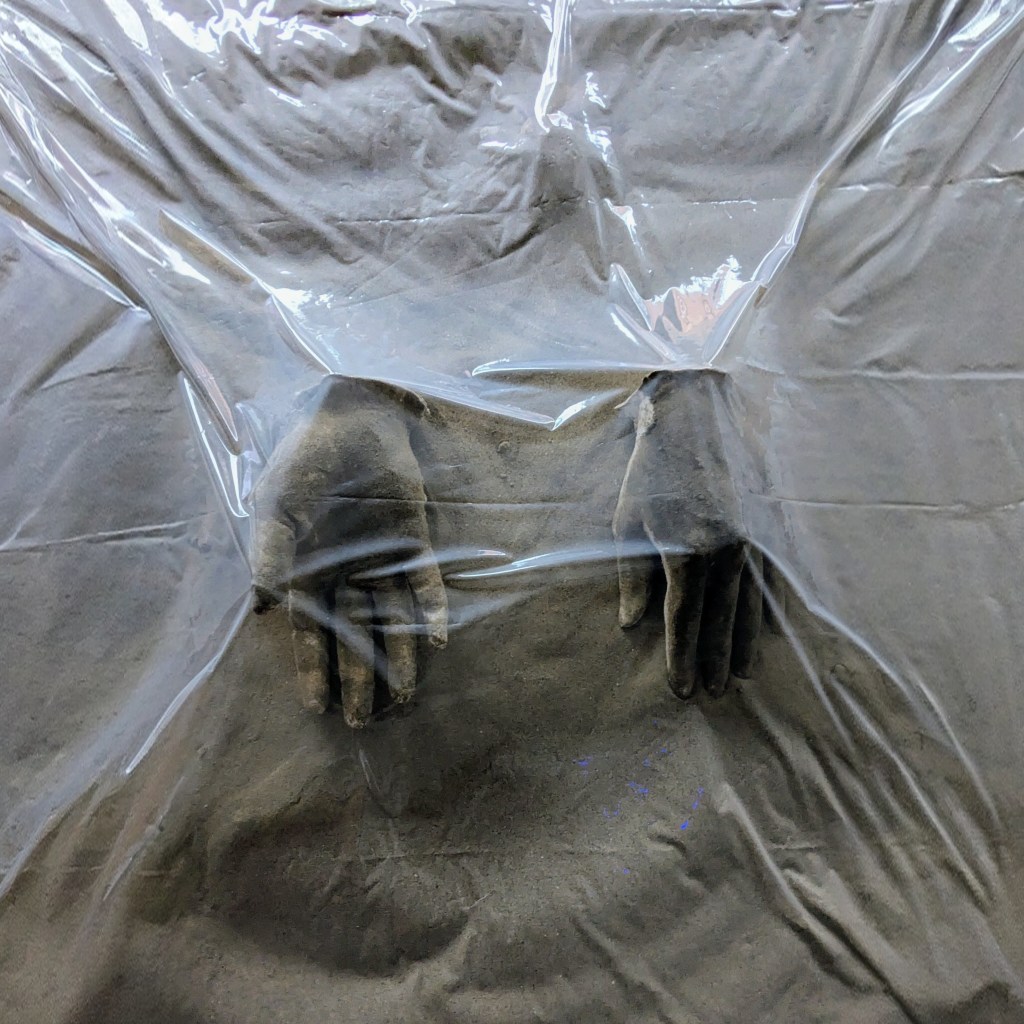
What remains of the human body when its ability to sense is removed? This five‑piece installation of conceptual sculpture poses that question by isolating each of the five sensory organs sight, hearing, taste, touch, and smell and suspending them in a vacuum-like condition. The works vary in scale but share a common material language, offering a unified yet unsettling tableau where perception is severed and the body is reduced to its essence: material.
Our bodies are both matter and memory. They gather information through external stimuli and encode those experiences as feeling, habit, and identity. This project interrogates that entanglement how the material body (what we are made of?) interweaves with the information it accumulates (what we know and feel?). By conceptually removing the channels of taste, touch, sight, smell, and hearing, the installation proposes a radical thought experiment: if perception ends, does the body become only matter? Does identity dissolve when sensation is withdrawn?
Rather than treating vacuum merely as a display condition, the installation uses it as a conceptual engine, a space where perception collapses and meaning thins to the point of near‑absence. A vacuum signifies the removal of air and interaction, creating a field devoid of external stimuli. In this state, the organs are present yet disconnected, emblematic of bodies severed from experience. Vacuum environments evoke sterilization and analytical clarity. Here, they function philosophically, stripping away cultural noise and narrative overlays to expose the raw, unmediated materiality of the body. Sound cannot travel in a true vacuum; movement is constrained. The sculptures become silent witnesses, their function suspended, their agency stilled a meditation on the fragility of human experience when contact with the world is cut. With associations to space and advanced technology, the vacuum introduces a futuristic lens placing the body in speculative conditions beyond Earthly atmospheres, as if testing the limits of embodiment itself. If perception defines existence, removing sensory input asks whether being without sensing is still being. The vacuum transforms the body into an object, sharpening the tension between material presence and experiential absence.
The series maintains a shared material palette to emphasise conceptual unity across organs while allowing scale to register the specificity of each sense. Formal restraint clean surfaces, controlled interfaces, and spare presentation reinforce the analytic tone of the work. The organs’ isolation in the vacuum signals functional suspension: the capacity to receive and transmit information is interrupted, leaving form to stand without utility. As the senses recede, the sculptures invite viewers to consider the boundary where being slips into objecthood. Without taste, touch, sight, smell, and hearing, the body both in the gallery and in thought becomes a material residue of itself. The installation does not claim that identity disappears; rather, it exposes how profoundly identity leans on the currents of sensation and external stimuli to remain legible.
Encountering the five works together is deliberately disorienting. You may feel drawn to read the organs as instruments searching for signal, yet the vacuum denies them contact. This withholding creates an affective tension: a quiet ache where empathy meets analytic distance. The experience is contemplative rather than spectacular inviting slow looking, awareness of breath, and an atonement to the gallery’s own acoustic near‑silence.
